

Ships require regular maintenance and repairs to ensure their safety, reliability, and operational efficiency throughout their service life, whether they are used to transport passengers or cargo.
One of the main facilities supporting these needs is shipyards, where new vessels are built and various maintenance or repair activities are carried out to keep ships in optimal condition.
So, what is a shipyard, what are its functions, and what methods are used for ship maintenance and repairs? Read on to find out the answers!
About Shipyards
A shipyard is an industrial facility where vessels are built, maintained, repaired, and modified.
In the international maritime industry, the term shipyard refers to a facility that supports a wide range of vessel-related activities, from newbuild construction to maintenance and repair work.
Meanwhile, a dock refers to a facility or designated area where vessels are positioned for inspection, maintenance, or repairs. One example is a dry dock, which allows a vessel to be taken out of the water so that the underwater hull can be inspected and repaired in dry conditions.
To better understand these facilities, take a look at the following image of a shipyard with a dry dock:
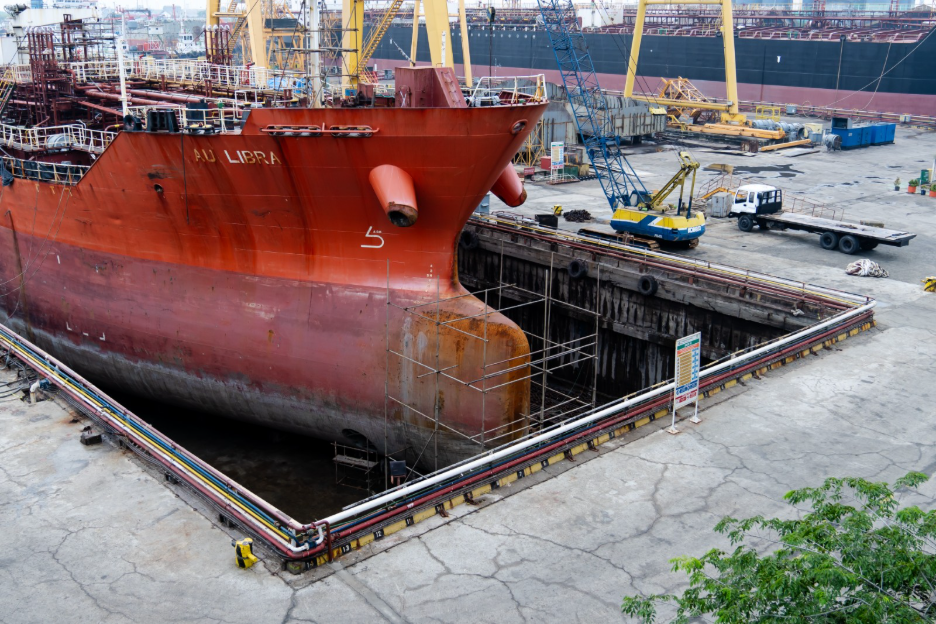
In other words, a shipyard encompasses a broader range of operations and may include several facilities, including docks used for vessel maintenance and repair.
Why Is Shipyard Crucial in the Maritime Industry?
Shipyards support the construction, maintenance, and repair of vessels, ensuring they continue to meet technical requirements and operate effectively. Below are some of their primary functions:
- Ensuring operational safety: Periodic inspections and maintenance help detect damage to a vessel’s structure, machinery, and safety systems, thereby reducing the risk of disruptions during a voyage.
- Supporting compliance with regulations and classification standards: Inspections of a vessel’s condition and components help ensure adherence to applicable technical requirements and classification standards.
- Improving fuel efficiency and vessel performance: By maintaining the engine, propellers, and hull, businesses can sustain optimal performance and support more efficient fuel consumption.
- Preserving long-term vessel performance: Early repairs and the replacement of worn-out components help prevent further damage and extend the vessel’s operational lifespan.
Types of Shipyards
Based on the nature of the work performed, shipyards can be classified into several categories. Below are three types of shipyards commonly found in the maritime industry:
Building Dock Shipyard
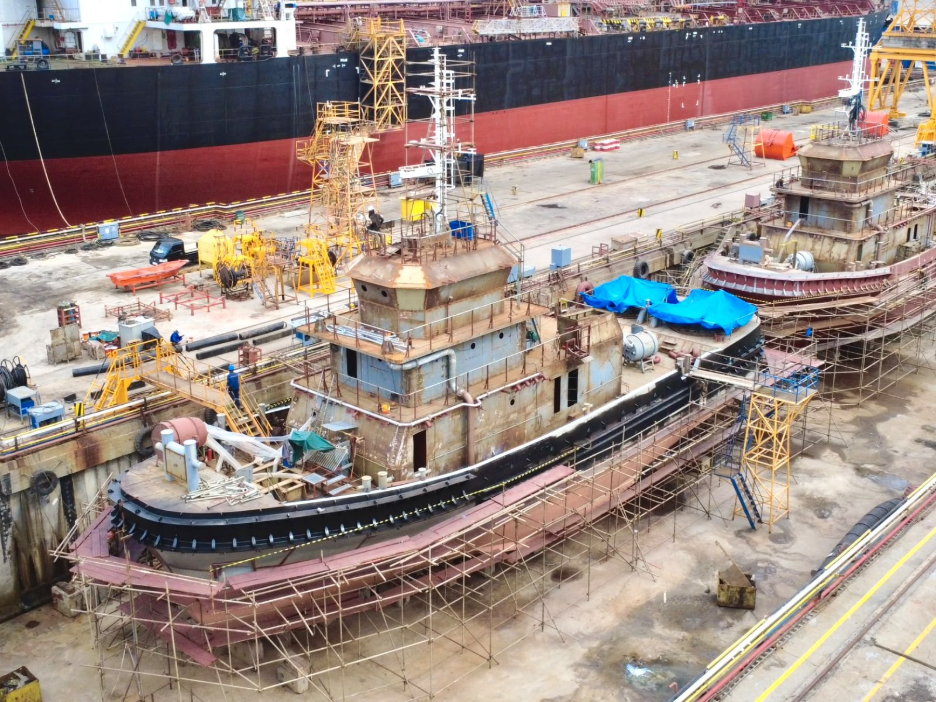
This type of shipyard is dedicated to the construction of new vessels, covering the entire process from initial build to final testing before the ship is handed over to its owner. Its operations include hull assembly, the installation of plating and frames, the fitting of equipment, and quality inspections of the work performed.
Repair Dock Shipyard
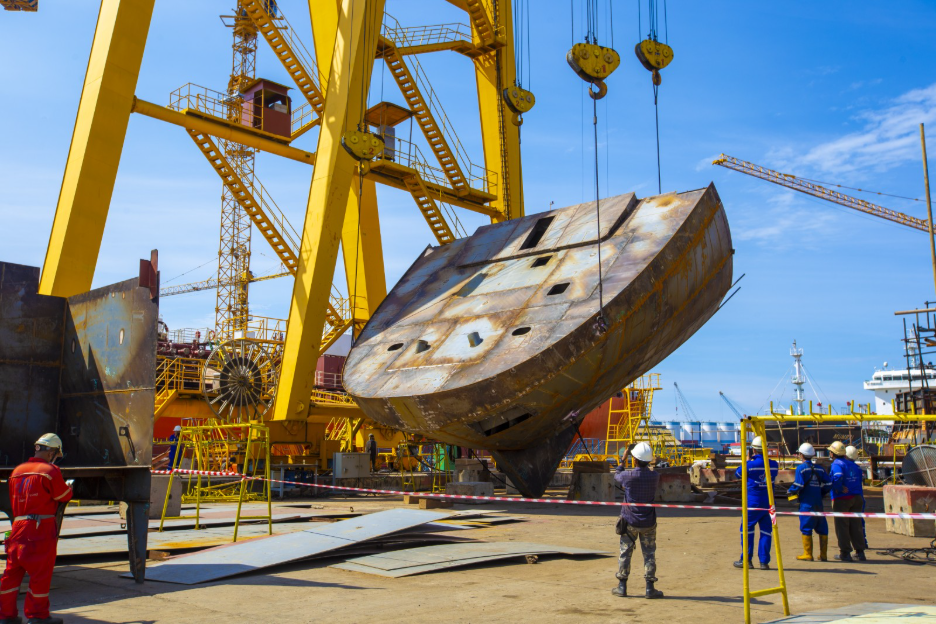
Repair dock shipyards focus on the maintenance and repair of vessels already in service, whether to address damage or to uphold their technical condition. The work performed may include repairs to the ship's hull, engines, and various pieces of equipment that support its operations.
Building and Repair Dock Shipyard
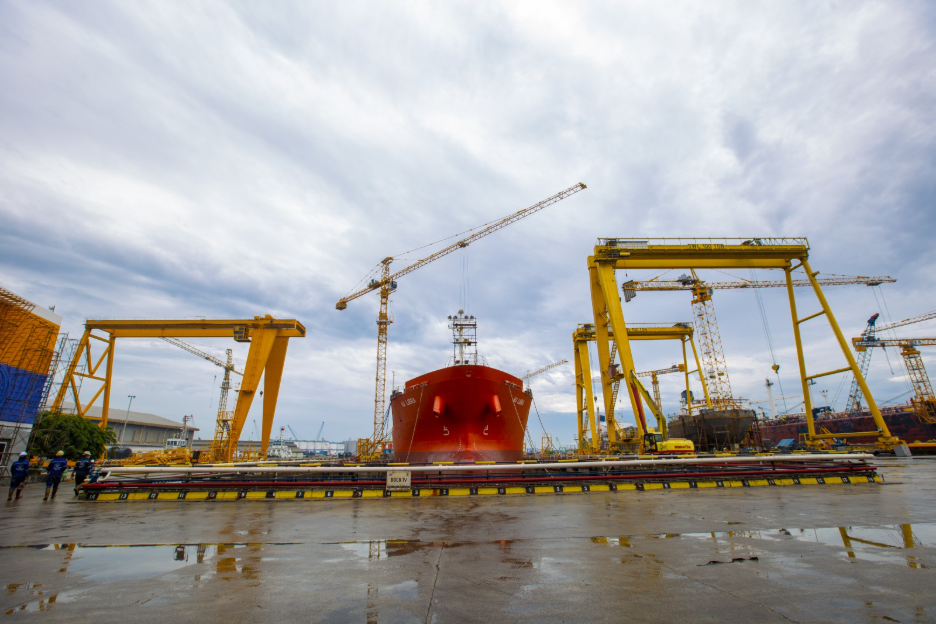
This type of shipyard caters to both the construction of new vessels and the maintenance and repair of existing ones. Equipped with facilities that support both activities, such a shipyard can handle any requirements for shipbuilding and vessel maintenance projects.
Ship Docking Processes and Methods
In general, ship docking involves several stages of work and can be carried out using various methods, explained as follows:
Ship Docking Process
The ship docking process is carried out in stages, from moving the ship to the docking facility to launching it back into the water. The following are the general steps:
- Transferring the Ship to the Dock: The vessel is moved into the docking facility using a method suited to the facility's design, either by towing the ship to a docking area or guiding the ship to a special platform.
- Hull Cleaning and Inspection: Once the vessel is secured, the hull is cleaned to remove marine growth, scale, and corrosion. The hull is then inspected for damage and areas that require repair.
- Repair and Maintenance: Based on the inspection results, the necessary work is carried out. This may include hull repairs, engine and electrical system maintenance, component replacement, and repainting.
- Final Inspection and Testing: After the repairs are completed, the vessel components and systems are inspected and tested to ensure they meet the required technical standards and are functioning properly.
- Returning the Ship to the Water: Once all work and inspections are complete, the vessel is returned to the water. Depending on the docking facility, this may involve refloating the vessel or moving it out of the dock.
Ship Docking Methods
Ship docking methods vary depending on the design and mechanism of the facility used to lift or position a vessel. The choice of method depends on the vessel's size, the type of work required, and the facilities available at the shipyard. The most common methods include:
- Floating Dock: A floating structure that can be raised or lowered by adjusting the water in its ballast tanks. The vessel is positioned above the dock, which is then raised to bring the hull out of the water for inspection and repairs.
- Graving Dock (Dry Dock): A basin built along the waterfront, equipped with a gate and drainage pumps. The vessel enters when the water level is equal to that of the surrounding sea. The gate is then closed, and the water is pumped out, allowing the vessel to be inspected and repaired in dry conditions.
- Slipway Dock: Uses an inclined surface and rails to pull a vessel out of the water with the help of a hauling cradle, winches, and steel cables. This method is generally used for smaller vessels.
- Syncrolift Dock: Uses a vertically moving platform to lift a vessel out of the water and onto a working area, where maintenance and repair work can be carried out.
ISO-Certified Shipyard Solutions by Waruna Group
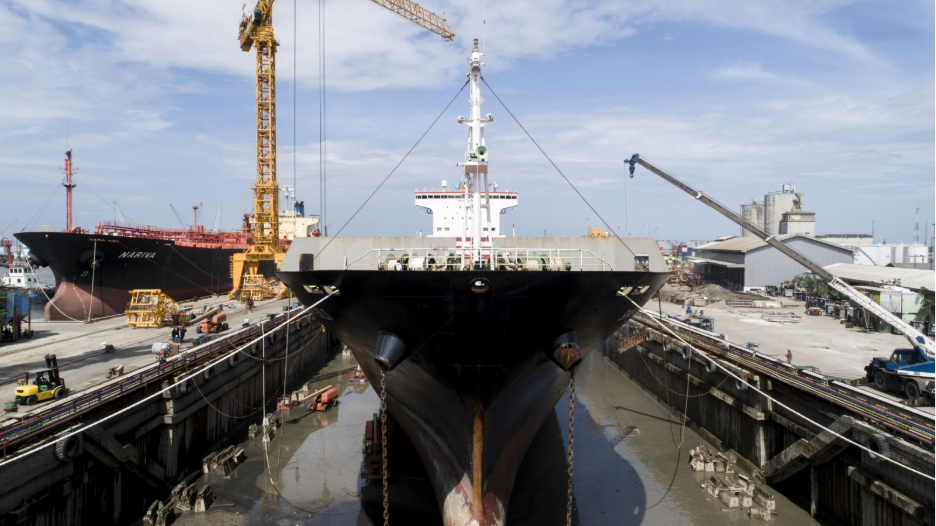
Shipyards help maintain vessels in good working condition through routine maintenance, repairs, and new vessel construction.
As a company operating in the shipping and maritime industry, Waruna Group provides trusted and certified Shipyard Services through Waruna Shipyard Indonesia (WSI). Our services cover vessel maintenance, repairs, and new build construction, supported by seven available docks.
Waruna Group's largest dry dock can accommodate vessels with a deadweight tonnage (DWT) of up to 120,000.
With more than 35 years of experience as a maritime partner in Indonesia, Waruna Group also supports the distribution of energy and commodities across Indonesia, the ASEAN region, and other destinations. Our operations are backed by a fleet of hundreds of vessels across various classes to meet diverse maritime transportation needs.
Waruna Group's services are supported by skilled technical personnel and specialized equipment to handle a wide range of shipyard projects.
We also offer a range of shipyard services that can be tailored to your vessel's operational requirements, including:
- Machining Services: These services cover various machining operations, such as turning, crankshaft grinding, line boring, and flange facing. Waruna Shipyard also provides on-site machining using portable equipment to support repairs to vessel components.
- Mechanical Services: Waruna Shipyard handles repairs to vessel machinery and equipment, including turbochargers, hydraulic systems, and valves. Experienced technical personnel carry out specialized repairs to help maintain equipment performance.
- Blasting and Painting Services: These services prepare and protect vessel steel surfaces against corrosion. Coating systems are selected based on environmental conditions and the type of cargo handled to ensure appropriate protection for the vessel's structure.
- Lifting Equipment Services: To support the movement and handling of heavy components, Waruna Shipyard provides a range of lifting equipment, including gantry cranes with capacities of up to 200 tons and mobile tower cranes with a total capacity of 163 tons. This equipment supports shipyard projects involving heavy loads.
In addition to providing a range of technical services, WSI implements a management system based on international standards to maintain work quality and workplace safety.
This commitment was reflected in the Integrated Surveillance Audit II for ISO 9001:2015 (Quality Management Systems) and ISO 45001:2018 (Occupational Health and Safety Management Systems), conducted on September 21–22, 2026, by an authorized, certified third-party external auditor.
Following the evaluation, WSI received recognition for management's ongoing commitment to implementing ISO standards since 2015.
In addition, WSI recorded a customer satisfaction survey score of 3.26 in 2026, exceeding the established target of 3.0. Moreover, Waruna Group's shipyard services also reported zero customer complaints during the review period. These results formed part of the evaluation of the company's quality management and occupational health and safety systems.
With our shipyard facilities, diverse technical services, and commitment to quality management and workplace safety, Waruna Shipyard offers an option for vessel maintenance, repairs, and newbuild construction.
To find out which services best suit your vessel's condition and operational requirements, contact our team to discuss the right shipyard solutions for your business!