
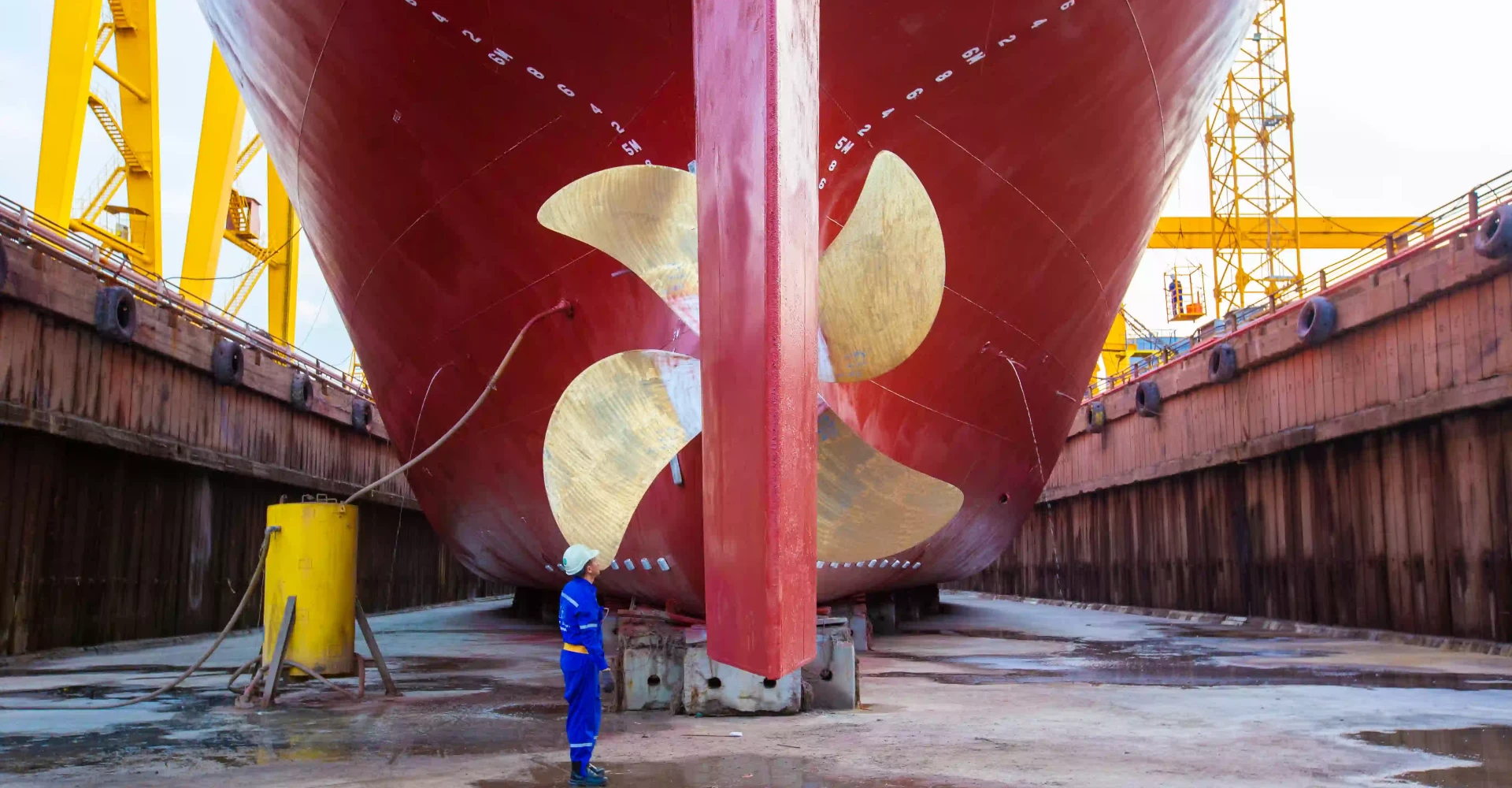
A vessel's movement through water is supported by a propulsion system capable of generating thrust according to its operational requirements. One of the components involved in this process is the propeller, which is installed at the stern of the vessel.
The selection of a ship propeller must be adjusted to the propulsion characteristics and requirements of each vessel. Tankers, barges, and tugboats use different propeller types, designs, and mechanisms to support their operations.
So, what are the different types of ship propellers, and how do they work? Find out more in this article!
About Ship Propellers
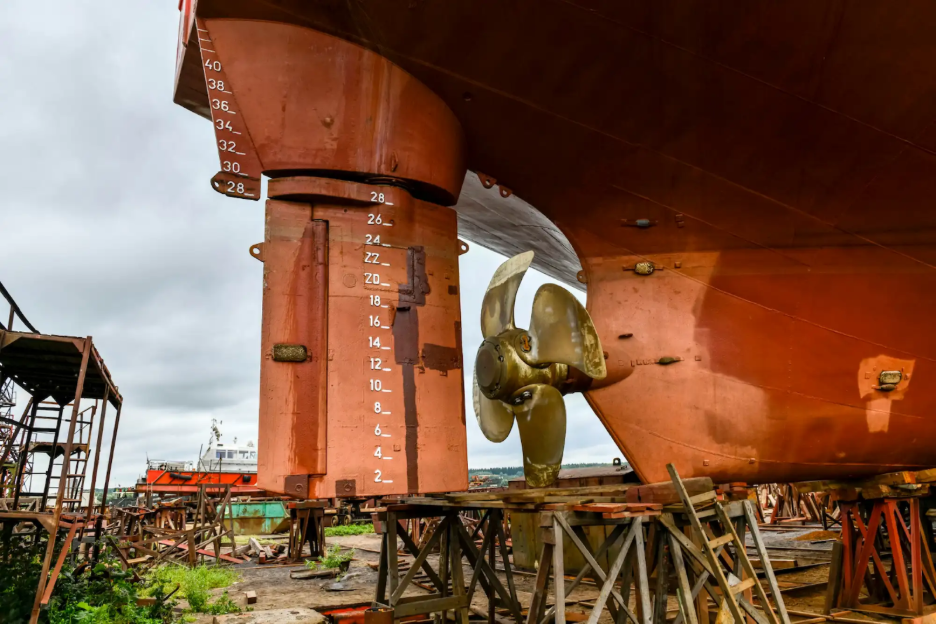
A ship propeller is a component of the vessel's propulsion system. It is shaped like a fan and installed at the stern. This propeller consists of several blades attached to a single shaft, which rotates when the vessel is in operation.
For a clearer picture, you can refer to the following image of a ship propeller. Its shape resembles a fan, with several blades extending outward from a central hub.
Functions of a Ship Propeller
In addition to generating thrust, a ship propeller serves several other functions that support smooth vessel operations, including:
- Regulating vessel speed: The amount of thrust generated by the propeller affects the vessel's speed. However, its actual speed is also influenced by external factors, such as wind direction, currents, and ocean waves.
- Supporting vessel maneuverability: A propeller helps a vessel perform various movements during operation, including turning, approaching a dock, and leaving its berth. The thrust generated by the propeller is essential for controlling the vessel's movements according to operational needs.
- Ensuring smooth vessel operations: A properly functioning propeller helps the propulsion system operate optimally. Conversely, damage to the propeller blades or shaft can disrupt thrust generation, cause vibrations, and hinder vessel operations.
Components of a Ship Propeller
A ship propeller consists of several components that work together to transmit power from the engine and generate thrust. Here are some of the main components of a ship propeller you should know:
- Blades: The rotating parts of the propeller that interact directly with the water to generate thrust. The number and shape of the blades may vary depending on the design and propulsion requirements of the vessel.
- Hub: The central part of the propeller where the blades are attached. It is connected to the shaft and transmits rotational power, allowing the blades to rotate. In certain propeller types, the hub also houses the mechanism for adjusting blade pitch.
- Shaft: The shaft connects the propeller to the main propulsion engine and transmits rotational power from the engine to the propeller. This allows the propeller to rotate according to the power supplied by the propulsion system.
- Nozzle (Duct): A ring-shaped structure surrounding the propeller blades in a ducted propeller. This component helps direct the water flow around the propeller to increase thrust, particularly under certain operating conditions.
- Bearings and Seals: Bearings support the shaft and allow it to rotate smoothly, while seals prevent water from entering the vessel through gaps around the shaft. Both components help maintain the safety and efficiency of the propulsion system.
- Control System: In certain propeller types, such as Controllable Pitch Propellers (CPP) and Azimuth Thrusters, the control system regulates the propeller's operating mechanism. In a CPP, this system allows the blade pitch to be adjusted so that thrust can be adapted to the vessel's operational requirements.
Read also: The World's Largest Tankers, Including One from Indonesia!
Types of Ship Propellers
Differences in vessel operational requirements also influence the design of their propulsion systems. This can be seen in the various types of propellers used across different vessels. The following are some common types of marine propellers:
1. Fixed Pitch Propeller (FPP)
An FPP has fixed blade angles that cannot be adjusted while the vessel is operating. Its construction is relatively simple, durable, and easy to maintain. This type is commonly used on vessels with relatively constant propulsion requirements, such as tankers.
2. Controllable Pitch Propeller (CPP)
A CPP is equipped with a mechanism that allows its blade angles to be adjusted according to operational requirements. This adjustment enables vessels to regulate thrust when moving forward, reversing, or maneuvering. This type is suitable for vessels that require greater propulsion flexibility, such as tugboats.
3. Ducted Propeller (Kort Nozzle)
This type features a ring-shaped casing surrounding the propeller to direct water flow. This design helps increase thrust, particularly at low speeds and when the vessel is carrying heavy loads. Ducted propellers are commonly used on tugboats.
4. Feathering Propeller
A feathering propeller has blades that can rotate until they align with the direction of water flow when not in use. This position helps reduce water resistance when a sailing vessel moves using wind power without engine assistance.
5. Twin-Screw Propeller
A twin-screw propeller uses two propellers installed on the port and starboard sides of the vessel's stern. This configuration provides additional thrust control options that can help improve maneuverability and vessel stability.
6. Waterjet Propeller
A waterjet uses a system that draws in water, channels it through a passage, and expels it at high pressure to generate thrust.
Since it does not use exposed blades beneath the hull, this system is suitable for high-speed vessels and those operating in shallow waters.
7. Azimuth Propeller
An azimuth propeller has a propulsion unit that can rotate up to 360 degrees around a vertical axis. This capability allows vessels to change the direction of thrust directly without relying on a conventional rudder. Tugboats are among the vessel types that use this propulsion system.
8. Contra-Rotating Propeller
A contra-rotating propeller uses two propellers mounted on the same axis and rotating in opposite directions. This arrangement helps utilize the water flow generated by the first propeller, improving propulsion efficiency, and reducing energy losses caused by water rotation.
9. Overlapping Propeller
An overlapping propeller uses two propellers installed close together in an overlapping arrangement. Both propellers rotate in the same direction in a specific configuration to improve water flow utilization and generate more optimal thrust.
10. Tandem Propeller
A tandem propeller uses two propellers installed close together on separate shafts and rotating in the same direction. This configuration is designed to optimize water flow between the two propellers, potentially increasing thrust and propulsion system efficiency.
Read also: 10 Types of Barges Used in Maritime Logistics
How Does a Ship Propeller Work?
A ship propeller works by transmitting power from the engine to generate thrust that propels the vessel forward.
This process relies on the rotation of the propeller blades to push water in the opposite direction of the vessel's movement. In general, this mechanism involves the following stages:
1. Transmitting Power from the Engine to the Shaft
The ship's engine generates mechanical power, which is transmitted to the propeller shaft through the transmission system. This power causes the shaft to rotate, driving the propeller attached to its end.
2. Propeller Rotation Generates Thrust
As the shaft rotates, the propeller's blades also rotate and push water toward the rear of the vessel. This movement generates a reaction force that pushes the vessel in the opposite direction, following the action-reaction principle of Newton's Third Law of Motion.
3. Controlling the Vessel's Direction of Movement
The direction of the thrust generated by the propeller can be adjusted to support both forward and backward movement. In a Fixed Pitch Propeller (FPP), the direction of movement is generally changed by reversing the engine's rotation. Meanwhile, in a Controllable Pitch Propeller (CPP), the direction and magnitude of thrust can be regulated by adjusting the blade angles.
4. Adjusting Rotation to Generate Thrust
The amount of thrust generated depends on the rotational speed, blade pitch, and propeller design. Adjusting these parameters allows the propulsion system to generate thrust according to the vessel's operational requirements.
Read also: Types LPG Carriers for Liquefied Gas Distribution
Maintain Your Vessel's Performance with Waruna Group's ISO-Certified Shipyard Services
A ship propeller must be properly maintained to ensure that the propulsion system operates efficiently throughout a voyage. Regular inspections and repairs are essential parts of vessel maintenance to prevent damage to propulsion components and other vessel parts.
To support these maintenance activities, vessels require services from shipyards equipped with adequate facilities and reliable operational standards. Both aspects are essential to ensure that vessel repairs and maintenance can be carried out properly.
Through PT Waruna Shipyard Indonesia (WSI), Waruna Group provides Shipyard Services supported by ISO 9001 and ISO 45001 management systems, which have been consistently implemented since 2015. These standards cover quality management as well as occupational health and safety (OHS) in operational activities.
In terms of facilities, WSI operates seven docks to accommodate various vessel maintenance and repair requirements. These facilities are supported by several services, including machining, mechanical services, blasting and painting, and lifting equipment.
In addition to its shipyard facilities, Waruna Group also provides Shipping Services with a fleet of more than 150 vessels across various categories. Its fleet includes oil tankers, LPG tankers, bulk carriers, harbour tugs, tug-and-barge vessels, and cement carriers.
These vessels support energy transportation and the distribution of various business commodities to destinations across Indonesia, the ASEAN region, and beyond.
The availability of both shipyard and shipping services reflects Waruna Group's more than 35 years of experience in the maritime industry.
With its shipyard facilities, consistently implemented management standards, and comprehensive shipping services, Waruna Group provides support for a wide range of vessel operational requirements.
You can consider Waruna Group's Shipyard Services for vessel maintenance, repairs, and other ship-related work. Contact Waruna Group to learn more about its available facilities and services.