
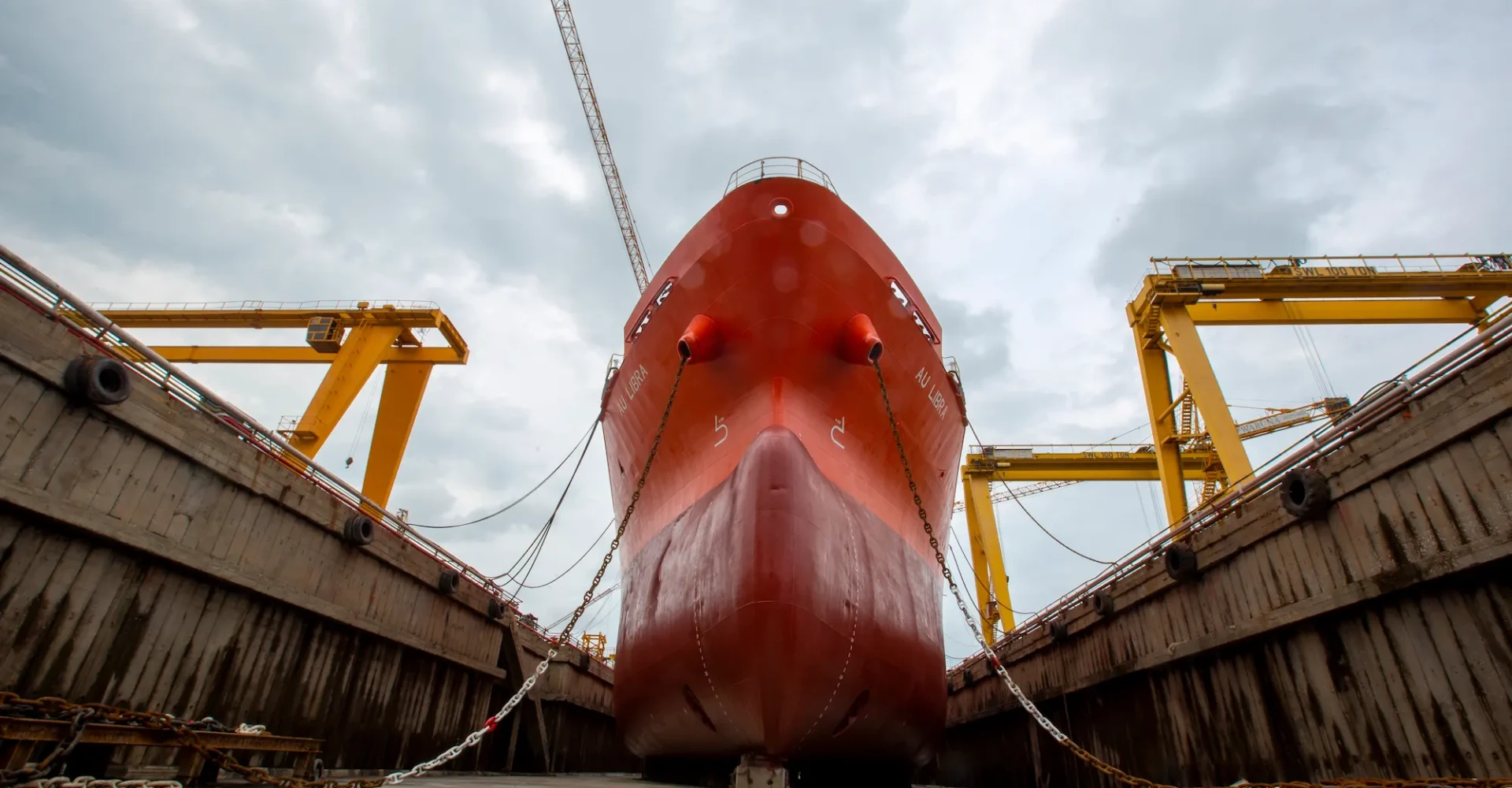
Ships that travel short and long distances every day while carrying various types of cargo must remain in optimal condition to ensure smooth and uninterrupted maritime operations.
To maintain reliable performance, ships need to undergo comprehensive inspections regularly. These inspections ensure that all vessel components, from the hull and engines to other supporting systems, remain in optimal working condition and do not disrupt sailing activities.
One of the key maintenance measures is ship docking, a process in which a vessel is placed in a designated facility so that specific parts can be inspected and repaired directly.
So, what is ship docking, and how is the process carried out? Read this article to the end to learn more about ship docking and the various aspects involved.
Definition of Ship Docking
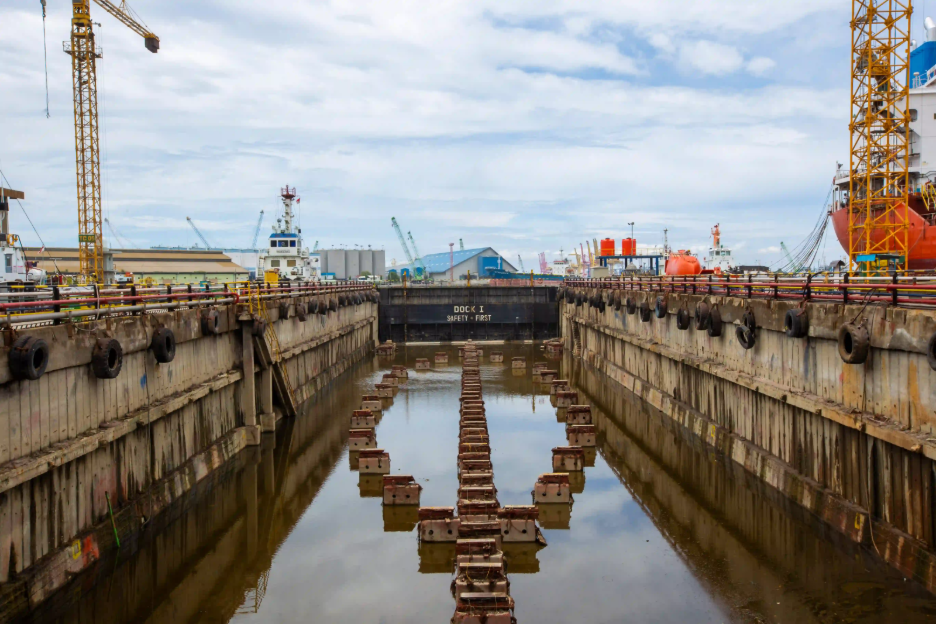
Ship docking is the process of moving or positioning a vessel into a dock for inspection, maintenance, and repair.
A ship dock, meanwhile, is a specialized facility equipped with the necessary infrastructure to support shipbuilding, maintenance, and repair activities.
During the docking process, a vessel is placed in this facility so that parts normally located below the waterline can be inspected and serviced directly.
These activities include cleaning the hull to remove dirt and marine organisms, repainting, and repairing damaged sections. Some of the key components inspected when a vessel enters a dock include:
- The underwater hull.
- Propellers and propeller shafts.
- Rudders and steering systems.
- Sea chests and valves.
- Corrosion protection systems.
Functions of Ship Docking
Exposure to seawater and ongoing sailing activities can cause various ship components to experience corrosion, wear, or reduced functionality. Therefore, regular inspections and maintenance through ship docking are essential.
In addition to maintaining a vessel's technical condition, ship docking serves several other important functions:
Reducing the Risk of Accidents at Sea
Inspections during docking help identify damage to various ship components, including the engine, onboard systems, hull, and other structural parts. Timely repairs can help reduce the risk of leaks and accidents during voyages.
Maintaining the Ship's Condition & Extending Its Service Life
Docking helps identify damage or wear to ship components caused by regular use and exposure to the marine environment. Routine maintenance helps preserve the vessel's condition and extend its service life.
Supporting Compliance with Maritime Regulations
Docking helps shipowners meet inspection and maintenance requirements established by relevant authorities. This ensures that the vessel's condition remains in line with applicable safety standards and maritime regulations.
Improving Ship Operational Efficiency
Through docking, the condition and performance of various ship components can be inspected to detect potential issues that could disrupt operations. Maintenance carried out during this process also helps keep the vessel operating at optimal performance, resulting in more efficient fuel consumption and lower operational costs.
Read also: Tanker Ships: Types & How to Choose the Right for Business
Types of Ship Docking
Ship docking can be carried out using different methods, depending on the type of facility and how the vessel is transferred from the water to the maintenance area. Below are five common ship docking methods:
Floating Dock
A floating dock is a type of docking facility designed as a floating structure that can be submerged and raised by adjusting its ballast water levels.
To receive a vessel, the dock is partially submerged by filling its ballast tanks with water. Once the vessel is positioned above the dock, water is pumped out of the tanks, allowing the structure to rise and lift the vessel until its hull is clear of the water.
Floating docks are typically made of steel and equipped with supporting facilities, including water pumps, cranes, and mooring equipment.
Dry Dock
A dry dock is a docking facility in which a vessel is placed inside an enclosed basin that can be drained of water.
Once the vessel is properly positioned, the water inside the dock is pumped out, leaving the vessel resting on specially designed support blocks in a dry environment.
This allows workers to access the underwater sections of the vessel directly and carry out the necessary inspection and maintenance work.
Graving Dock
A graving dock is a permanent, basin-shaped structure built along the coastline. It features reinforced walls and a solid floor designed to support a vessel once the water has been drained. A watertight gate at the entrance controls the flow of water and allows vessels to enter and leave the dock.
Before a vessel enters, seawater is allowed to flow into the basin until the water level matches that of the surrounding sea. Once the vessel is in position, the gate is closed and the water is pumped out, leaving the vessel resting on support blocks at the bottom of the dock.
Slipway Dock
A slipway is a docking facility that uses an inclined ramp, rails, and a supporting cradle to haul vessels out of the water.
The vessel is first positioned on a trolley or cradle, which is then pulled ashore using a winch and steel cables.
A typical slipway consists of a concrete ramp, rails, a hauling system, and other supporting equipment. Based on the direction of the hauling track, slipways are classified into two types: transverse and longitudinal.
Syncrolift Dock
A syncrolift is a ship-lifting system that uses a mechanically operated platform to raise vessels vertically out of the water and transfer them to a designated repair area.
The platform is equipped with synchronized lifting mechanisms that work together to keep the vessel stable and balanced throughout the lifting process.
To begin docking, the vessel is guided over the platform while it is submerged. Once the vessel is correctly positioned, the lifting system raises the platform until the vessel is completely clear of the water.
The vessel can then be moved to a designated work area for inspection, maintenance, or repair. Depending on the shipyard's capacity and layout, this system can also accommodate multiple vessels in rotation.
Read also: Coal Barges: Operations, Capabilities, and Advantages
Ship Docking Procedures
Ship docking involves several stages to ensure that a vessel is safely positioned and undergoes the necessary inspections and repairs.
The exact procedures may vary depending on the docking facility and method used. However, the process generally involves the following steps:
Selecting the Docking Facility
The first step is to select a suitable docking facility based on the vessel's size, type, and maintenance requirements. The availability of supporting equipment and the dock's capacity must also be considered to ensure the vessel can be docked safely.
Adjusting the Water Level in the Dock
Once the facility has been selected, the water level is adjusted according to the docking method being used. In a dry dock, for example, water is pumped out until the vessel rests on support blocks at the bottom of the dock. Other docking methods use different mechanisms to control water levels.
Positioning the Vessel on Support Blocks
Once the vessel reaches its designated position, support blocks are carefully placed and secured beneath the hull. These blocks hold the vessel in place and keep it stable throughout the inspection and repair work.
Conducting Inspections and Repairs
The vessel is then inspected to assess the condition of its hull, propulsion system, steering gear, and other components. If any damage or signs of deterioration are found, the necessary work can be carried out, including repairs, component replacement, cleaning, and repainting.
Carrying Out Final Checks and Refloating the Vessel
Once all maintenance work is complete, the vessel undergoes a final inspection to ensure that the serviced components are functioning properly. It is then refloated and returned to the water, ready to resume its operational activities.
How Often Should a Ship Undergo Docking?
Ship docking schedules in Indonesia are determined by vessel type and the applicable inspection requirements.
One of the key references is the Indonesian Ministry of Transportation Regulation No. PM 7 of 2024 concerning the Harmonization of Inspection and Certification Systems for Indonesian-Flagged Ships.
Under this regulation, the requirements for underwater hull inspections are divided into two categories:
- Cargo Ships: Article 19 stipulates that underwater hull inspections must be carried out at least twice within a five-year period.
- Passenger Ships: Article 25 requires underwater hull inspections to be conducted through dry docking once every year.
However, under certain circumstances, the regulations allow shipowners to apply for a postponement of the required inspection (Postponement of Survey/PD) through an official procedure. Such postponements may be granted if the vessel meets the applicable requirements and receives approval from the relevant maritime authorities.
Postponement is not granted automatically. The vessel must undergo an evaluation and inspection by a Marine Inspector, with input from the relevant classification society where required, to ensure that it remains technically sound and meets safety requirements throughout the extended period.
Therefore, ship docking intervals are not the same for every vessel. They depend on the vessel type, applicable inspection requirements, and any approved exceptions.
Read also: Shipyards as Strategic Infrastructure for the Shipping Industry
Keep Your Vessels Operating at Their Best with Waruna Group's ISO-Certified Shipyard Services
Ship docking requires well-equipped shipyard facilities to support vessel inspections, maintenance, repairs, and newbuilding projects. Specialized equipment and qualified technical personnel are also essential to ensure quality workmanship throughout the docking process.
With more than 35 years of experience in the maritime industry, Waruna Group has supported various shipping activities and energy distribution operations.
Specialized equipment and qualified technical personnel are also essential to ensure quality workmanship throughout the docking process.
With more than 35 years of experience in the maritime industry, we at Waruna Group have supported various shipping activities and energy distribution operations.
Through PT Waruna Shipyard Indonesia (WSI), we provide Shipyard Services backed by six docks with a capacity to accommodate vessels of up to 120,000 DWT. Our facilities support a wide range of projects, from routine vessel repairs to newbuilding works.
Our service capabilities cover various areas, including machinery, mechanical works, blasting and painting, as well as lifting equipment to support different shipyard operations.
To maintain the quality and safety of our operations, we also implement management systems aligned with international standards.
Our commitment was demonstrated through the Second Surveillance Audit for the Integrated ISO 9001:2015 Quality Management System and ISO 45001:2018 Occupational Health and Safety Management System, conducted by an external auditing body on September 21–22, 2026.
Today, we operate hundreds of vessels across various classes to support the distribution of energy and commercial commodities. Our transportation network spans multiple regions across Indonesia, ASEAN countries, and other international destinations.
Whatever your vessel maintenance and repair requirements, we are ready to support your operational needs. Contact our team to discuss your project requirements and find the right solutions for your vessel.