
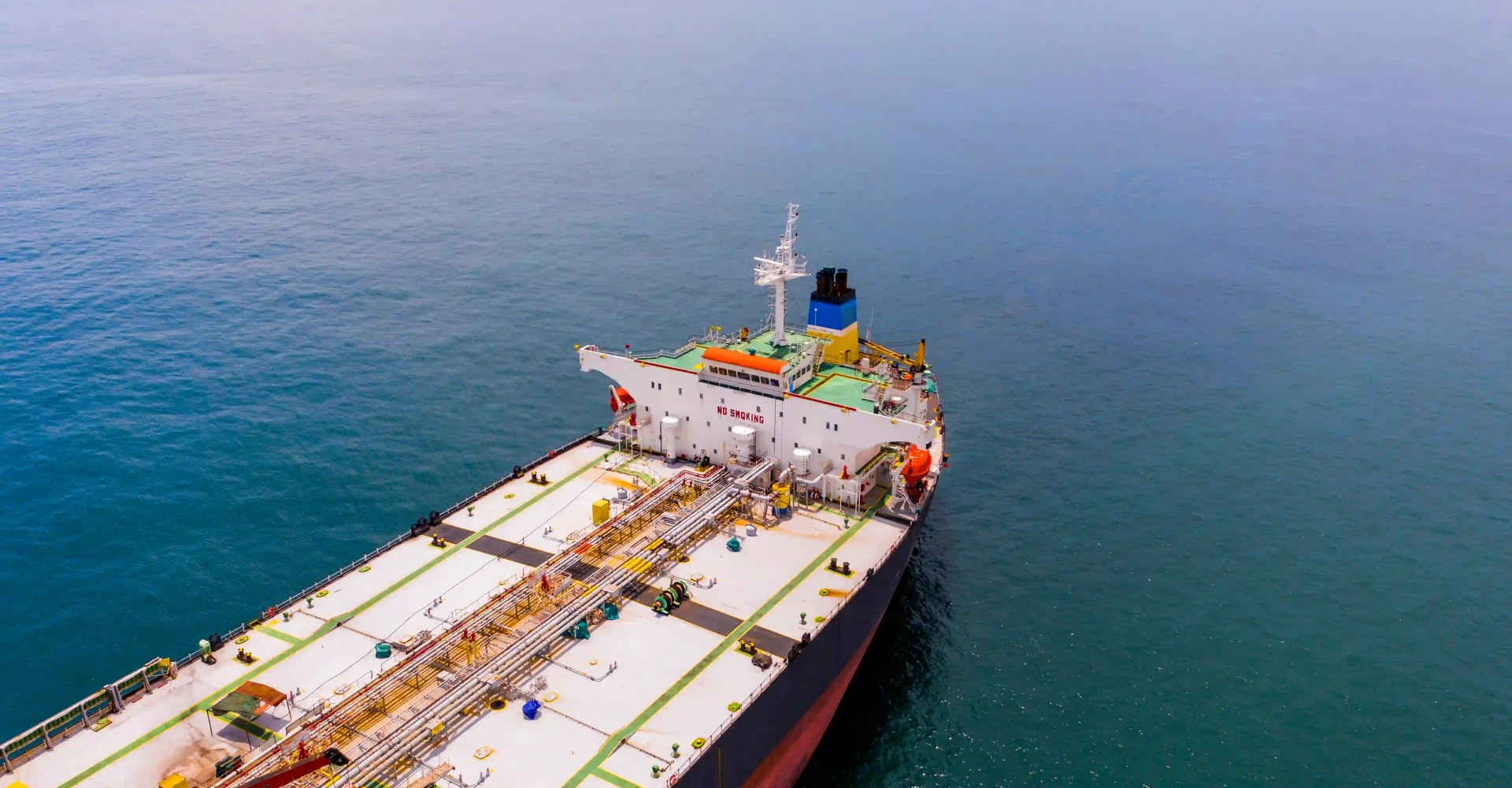
Every type of cargo transported by sea requires a storage space with specific characteristics. On cargo ships, for example, cargo holds are designed to accommodate goods while protecting them from seawater and various conditions encountered during the voyage.
So, what exactly is a cargo hold, and what are its functions, components, and characteristics across different types of ships? Find out more in this article!
What Is a Cargo Hold?
A cargo hold is a dedicated storage space inside a ship used to accommodate and protect cargo during sea transportation.
This space is generally located below the ship's main deck and is designed to keep cargo safe from seawater and weather conditions throughout the voyage. In maritime terminology, a cargo hold is also commonly referred to as a cargo space.
The shape and construction of cargo holds vary depending on the type of ship and the characteristics of the cargo being transported.
On container ships, for example, cargo holds are generally rectangular and equipped with securing systems to keep containers in place and prevent them from shifting during transit.
Meanwhile, tankers use cargo tanks, which are specially enclosed compartments designed to carry liquid cargo, such as oil and chemicals, as well as gas.
Therefore, cargo hold designs and specifications play an important role in determining the types of cargo a ship can carry.
Functions of Cargo Holds
During a voyage, cargo holds serve several important purposes to support cargo transportation. To better understand their role, here are some of its key functions based on operational needs:
Accommodating Various Types of Cargo
The primary function of a cargo hold is to provide storage space for various types of cargo transported by sea.
These may include consumer goods, construction materials, heavy equipment, agricultural products, and other industrial commodities. The capacity and design of each cargo hold are tailored to the characteristics of the goods to ensure optimal use of the available storage space.
Maintaining Ship Stability During Voyages
Cargo placement inside the holds also affects a ship's stability while sailing. Therefore, cargo distribution must take into account the capacity of each hold and ensure that the overall load is properly balanced.
Improper cargo distribution can result in an uneven load, increasing the risk of the vessel listing and experiencing stability issues during the voyage.
Supporting Efficient Loading and Unloading Operations
Proper cargo hold design and arrangement allow crew members and port personnel to access cargo more easily.
A well-planned cargo hold layout is particularly helpful when loading and unloading mineral commodities, such as coal, iron ore, and nickel ore.
As a result, transferring minerals between ships and port storage facilities, in either direction, can be carried out in a more organized and efficient manner.
Protecting Cargo from Damage During Transportation
During a voyage, cargo may be exposed to seawater, rain, strong winds, and other changing weather conditions. Cargo holds are equipped with covers designed to protect goods from these external elements.
In addition, their structural design and internal securing systems help prevent cargo from shifting or sustaining damage due to the movement of ocean waves. This helps maintain cargo quality and condition until the vessel reaches its destination port.
Read also: Types LPG Carriers for Liquefied Gas Distribution
Components of a Ship's Cargo Hold
A ship's cargo hold consists of several interconnected components that work together to keep cargo secure throughout the voyage. The following are some of its main components:
Cargo Floor (Tank Top/Bottom)
The cargo hold floor forms the bottom surface of the storage space and serves as the foundation for the cargo. This section is generally equipped with a non-slip surface to reduce the risk of goods shifting due to vessel movement.
This surface also helps ensure the safety of crew members when carrying out activities inside the cargo hold.
Cell Guides
Cell guides are steel guide rails installed inside a ship's cargo hold. These components help guide cargo placement, ensuring that containers are loaded into their designated positions.
With these guide rails in place, cargo can be arranged more systematically and remain stable throughout the voyage.
Hatch Cover
Hatch covers are structures that seal access to the cargo hold from the ship's deck. They are designed to protect cargo from rainwater, seawater, and other weather-related elements.
In addition, hatch covers can be opened and closed to facilitate loading and unloading operations.
Cargo Hold Ventilation
Ventilation systems regulate air circulation inside the cargo hold to maintain environmental conditions suitable for the type of cargo being transported.
Proper air circulation helps control temperature and humidity, reducing the risk of cargo damage caused by unsuitable atmospheric conditions.
In addition to these four main components, cargo holds may also be equipped with protective padding, securing devices, and operating mechanisms to support cargo handling activities.
All these components must be designed with consideration for structural strength, watertight integrity, and ease of operation.
Regular inspections and maintenance are also essential to ensure that every component continues to function properly throughout the vessel's service life.
Read also: Tugboats: Small Vessels with a Vital Role in Maritime Industry
Types of Cargo Holds Based on Ship Types and Cargo Characteristics
Cargo hold designs vary depending on the type of vessel and the nature of the cargo being transported. Some are built to accommodate large quantities of solid bulk cargo, while others are designed to store liquid cargo or maintain controlled temperatures for goods that require special handling.
To better understand these differences, here are the main types of cargo holds based on vessel types and their respective cargo requirements.
Conventional Ship Cargo Holds
Conventional ship cargo holds are used to store general cargo, such as consumer goods, construction materials, and various industrial products.
These holds are also equipped with hatch covers that can be operated manually or through hydraulic systems to facilitate loading and unloading operations.
Waruna Group also supports cement transportation through its fleet of cement carriers operated under its Shipping services.
Two vessels in this fleet are MV MARTHA GOLDEN, with 8,581 DWT, and MV CEMCON, with 6,243 DWT.
Both vessels transport cement to various destinations across Indonesia, with loading ports including Tanjung Priok, Marunda, Tarjun, Makassar, and Biringkassi, and unloading ports in Surabaya, Lembar, Samarinda, and Banjarmasin.
Bulk Carrier Cargo Holds
Bulk carrier cargo holds are designed to transport large quantities of unpackaged goods without the use of individual packaging or containers. Common cargo carried in these holds includes coal, iron ore, and grain.
Waruna Group supports the transportation of such bulk commodities through its Shipping services, which operate a fleet of bulk carriers.
The fleet includes MV FORUM, a Supramax-class vessel with 46,743 DWT, built by Kanashi Co., Ltd. Another vessel is MV GOLDEN DESTINY, a Handymax-class vessel with 28,382 DWT, built by Imabari Shipbuilding Co., Ltd.
Tanker Cargo Holds
Unlike vessels designed to carry solid goods, tankers use enclosed storage compartments in the form of tanks to accommodate liquid cargo and certain types of gas. The cargo transported may include crude oil, refined petroleum products, chemicals, and liquefied gases.
Through its Shipping services, Waruna Group also operates tanker vessels comprising oil tankers and LPG tankers.
Its oil tanker fleet includes MT AMBERMAR, a Medium Range-class vessel with 35,970 DWT, and MT DEFIANCE, a Long Range-class vessel with 105,538 DWT. These vessels were built by STX Shipbuilding Co., Ltd. in Daedong, South Korea, and Sumitomo Heavy Industries in Japan, respectively.
Meanwhile, liquefied gas transportation is supported by a fleet of fully pressurized LPG tankers. These include GAS LAURA, with a capacity of 4,127 m³, built by Kitanihon Shipbuilding Co., Ltd., and GAS PATRICIA, with a capacity of 3,513 m³, built by Hitachi Zosen Mukaishima Marine Co., Ltd.
Refrigerated Cargo Holds
Refrigerated cargo holds are used to transport goods that require temperature control throughout the voyage.
These compartments are equipped with refrigeration systems that can be adjusted to suit the specific requirements of different cargo types, such as meat, frozen food, seafood, and certain pharmaceutical products.
Maintaining the appropriate temperature helps slow down product deterioration, ensuring that cargo remains in good condition until it reaches its destination port.
Read also: 5 Tanker Ship Sizes Every Shipping Business Must Know
Waruna Group: Your Trusted Maritime Partner in Indonesia with Diverse Shipping Services and Vessel Fleets
A ship's cargo hold serves as a storage space for accommodating and protecting cargo throughout a sea voyage. Its design, capacity, and construction must be tailored to the type of goods being transported to ensure cargo remains secure during transit.
Choosing the right type of vessel is equally important, as it must align with the cargo characteristics and distribution requirements.
Waruna Group supports maritime transportation across Indonesia through its Shipping Services, offering a diverse range of vessel fleets.
These include oil tankers, LPG tankers, bulk carriers, harbour tugs, tug and barge vessels, and cement carriers, each serving different purposes in maritime operations.
With more than 35 years of experience in the maritime industry, Waruna Group is committed to serving as a reliable partner for shipping and maritime transportation in Indonesia.
The company operates hundreds of vessels across various classes to support the distribution of energy resources to remote areas, ASEAN countries, and other destinations.
Its extensive operational network also facilitates the transportation of various business commodities through strategically located ports across Indonesia.
Contact our team today to learn more about its Shipping services and explore the available transportation solutions for your business.