
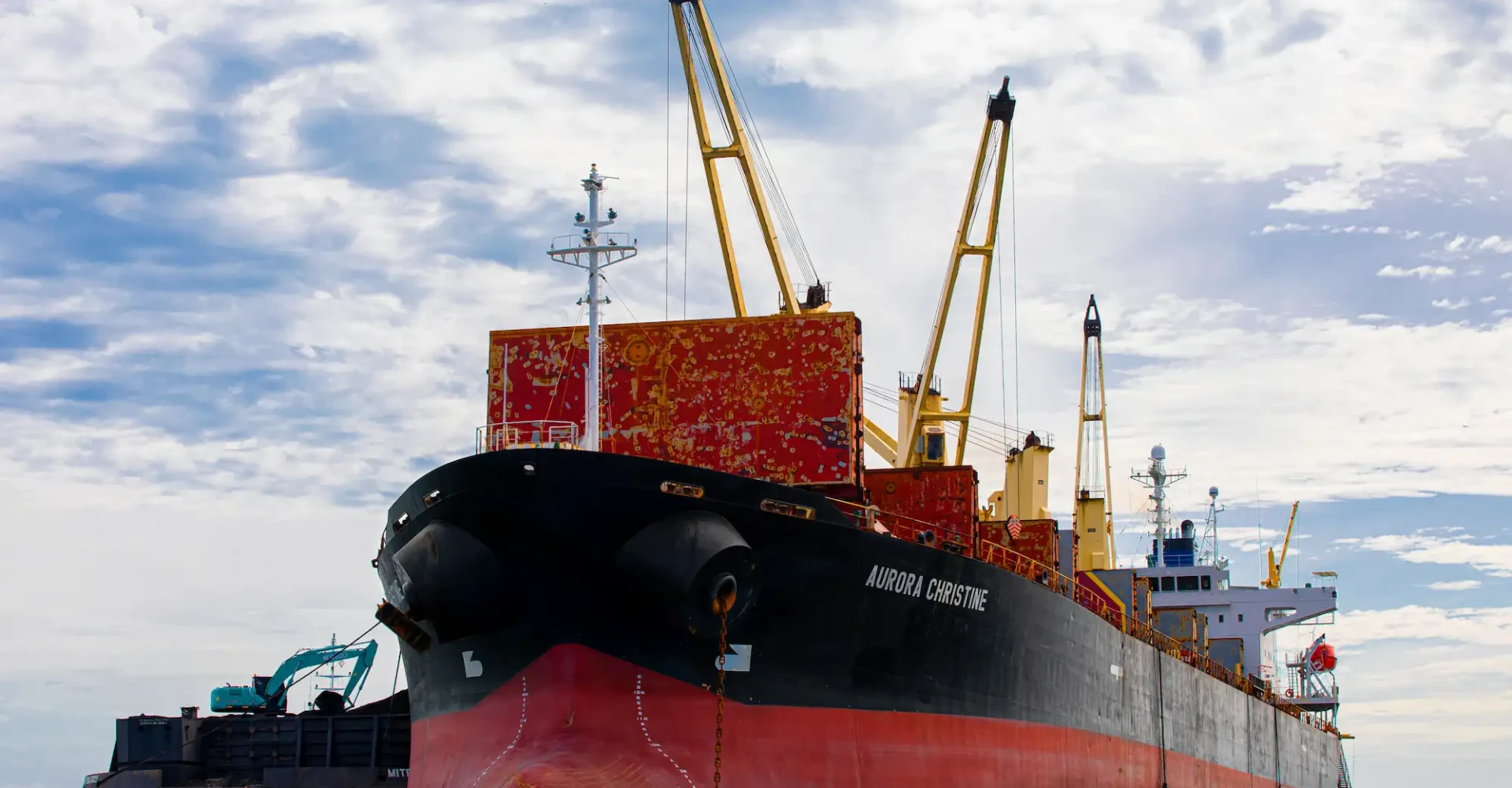
In the transportation of dry bulk commodities, bulk carriers are used to transport large quantities of cargo by sea.
These vessels are designed with specialized cargo holds, allowing goods to be transported without the need for individual packaging. Their carrying capacity and specific characteristics make bulk carriers one of the preferred vessel types for supporting the distribution of various industrial commodities.
However, vessel selection does not depend solely on cargo capacity. The type of commodity, shipping distance, and cargo handling facilities available at ports must also be considered to ensure that the transportation process meets specific shipping requirements.
To learn more about the functions, types, advantages, and disadvantages of bulk carriers, read the full discussion in this article!
About Bulk Carriers and Their Functions
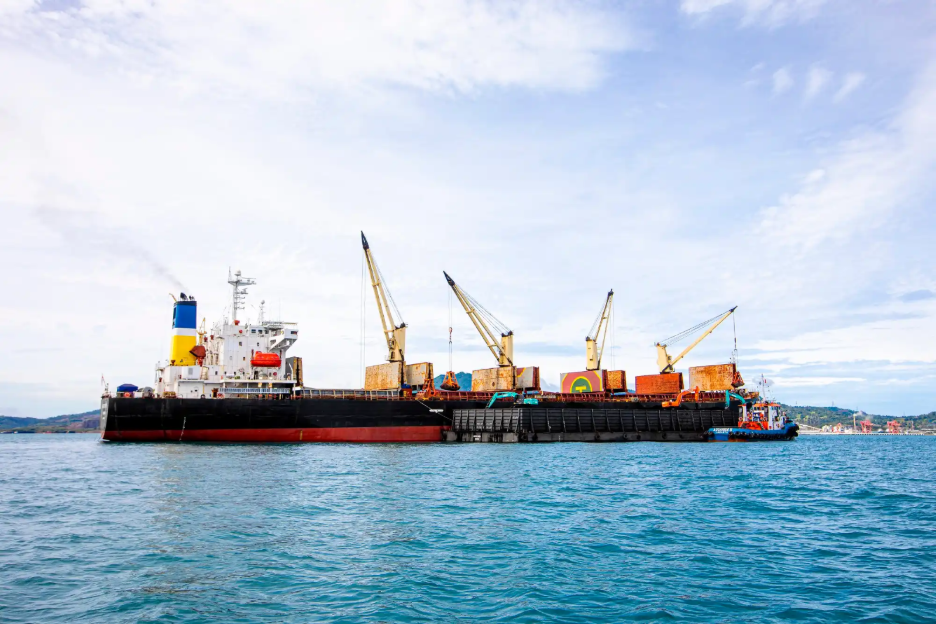
A bulk carrier is a type of cargo vessel specifically designed to transport large quantities of dry bulk cargo without the use of packaging or containers.
The cargo is loaded directly into the vessel's cargo holds, allowing large volumes of goods to be transported in a single voyage. For this reason, bulk carriers are also commonly referred to as bulk cargo vessels or simply bulkers.
As their name suggests, bulk carriers serve as maritime transportation vessels for various unpackaged dry commodities, such as mining products and agricultural goods.
To support cargo transportation, bulk carriers are equipped with several large-capacity cargo holds and a strong hull structure capable of withstanding heavy cargo loads.
Each cargo hold is also fitted with a cover (hatch cover) to protect the cargo from exposure to seawater during the voyage. In addition, some bulk carriers are equipped with their own cranes or cargo handling equipment, allowing them to operate at ports with limited facilities.
The primary function of bulk carriers is to distribute various dry bulk commodities from producing regions to countries or regions where they are needed.
Commonly transported cargo includes coal, iron ore, nickel ore, bauxite, wheat, corn, soybeans, fertilizers, and clinker (a semi-finished material used in cement production).
Transporting these commodities in large quantities helps meet the raw material demands of various industrial sectors while supporting international trade.
Read also: Barges in the Maritime Industry: Functions and Types
Types of Bulk Carriers Based on Carrying Capacity
Bulk carriers are classified into several types based on their size and cargo-carrying capacity. These differences affect the types of commodities they transport, their sailing range, and the ports they can access.
The following are several types of bulk carriers based on their carrying capacity:
Mini Bulk Carrier
A mini bulk carrier is a small-sized bulk carrier with a carrying capacity of less than 10,000 deadweight tonnage (DWT).
Its compact size allows it to operate in shallow waters and smaller ports with limited facilities.
These vessels are generally used to transport relatively small quantities of bulk cargo, particularly on short-distance shipping routes.
Handy Size Bulk Carrier
A Handy Size bulk carrier has a carrying capacity of approximately 15,000–35,000 DWT. Its relatively compact size and onboard cranes or cargo handling equipment makes it suitable for various loading and unloading operations.
This type of bulk carrier offers considerable operational flexibility, as it can serve various shipping routes and access a wider range of ports, including those with limited cargo handling facilities or water depth.
Handymax dan Supramax
Handymax bulk carriers have a carrying capacity of approximately 40,000–50,000 DWT, while Supramax vessels are slightly larger, with a capacity of around 50,000–60,000 DWT.
Both types offer flexibility in transporting various bulk commodities and serving ports with limited cargo handling facilities.
Handymax and Supramax bulk carriers are generally equipped with their own cranes, allowing loading and unloading operations to take place without relying entirely on port equipment.
Panamax
Panamax is a type of bulk carrier whose dimensions are designed to comply with the maximum size limits of the Panama Canal. These vessels have a carrying capacity of up to approximately 80,000 DWT and a maximum beam of around 32 meters.
Their dimensions allow them to pass through the canal while transporting large quantities of commodities, such as coal, iron ore, wheat, and corn.
Capesize
Capesize bulk carriers are large vessels with a carrying capacity of approximately 150,000–200,000 DWT.
Due to their large dimensions, these vessels are too large to pass through the Panama and Suez Canals. As a result, they generally take alternative routes around the Cape of Good Hope in South Africa or Cape Horn in South America.
Their substantial carrying capacity makes Capesize bulk carriers widely used for transporting heavy commodities, particularly iron ore and coal, in large quantities.
Very Large Ore Carrier (VLOC)
A Very Large Ore Carrier (VLOC) is an ultra-large bulk carrier specifically designed to transport iron ore.
Its carrying capacity ranges from approximately 200,000–400,000 DWT, making it suitable for shipping large volumes of mining commodities over long-distance routes.
One of its primary uses is transporting iron ore from mining regions in Brazil to major steel production centers in China. Due to their enormous size, these vessels require ports with sufficient water depth and adequate cargo handling facilities.
Read also: 10 Types of Barges Used in Maritime Logistics
Bulk Carrier Loading and Unloading Configurations
Based on their cargo handling equipment, bulk carriers are divided into two configurations: geared bulk carriers and gearless bulk carriers.
The main difference between the two lies in the availability of onboard cargo handling equipment and their dependence on port facilities. The following explains each type:
Geared Bulk Carrier
A geared bulk carrier is a vessel equipped with its own cargo handling equipment, such as cranes. These facilities allow cargo to be transferred without relying entirely on equipment available at the port.
As a result, this type of bulk carrier offers greater flexibility when operating at ports with limited cargo handling facilities.
Gearless Bulk Carrier
Unlike the previous type, a gearless bulk carrier is not equipped with its own cranes or cargo handling equipment. Cargo transfer operations rely entirely on facilities available at the port, such as shore-based cranes or specialized cargo handling equipment.
This configuration results in a relatively simpler vessel design, as it does not require additional space or structural support for onboard cranes.
Advantages of Bulk Carriers
Bulk carriers offer several advantages in transporting commodities by sea, particularly when handling large quantities of bulk cargo. Some of these advantages include:
- Large carrying capacity: Bulk carriers can transport substantial quantities of bulk cargo in a single voyage. This helps improve distribution efficiency, particularly for commodities required in large volumes.
- Can transport various commodities: Bulk carriers can be used to transport a wide range of dry bulk cargo, including coal, iron ore, agricultural products, and fertilizers. This flexibility makes them suitable for various industrial sectors.
- Cost-efficient transportation: Their large carrying capacity allows more cargo to be transported in a single voyage, helping reduce transportation costs per ton of cargo.
Optimize Your Commodity Distribution with Waruna Group's Bulk Carrier Fleet
Various industrial sectors require large and consistent supplies of dry bulk commodities to support their operational activities. Therefore, selecting a fleet with the appropriate carrying capacity and facilities is an important consideration in maritime distribution.
To meet these needs, Waruna Group provides Shipping Services, including the chartering and operation of bulk carriers for private clients and state-owned enterprises (SOEs) across various regions of Indonesia.
This fleet supports the transportation of dry bulk commodities for various logistical and energy requirements, including coal distribution for power plants.
Waruna Group's bulk carrier fleet includes several vessel classes, such as Handysize, Handymax, and Supramax. Some of the vessels listed in our fleet include:
- MV FORUM: A Supramax-class vessel with a capacity of 46,743 DWT.
- MV GOLDEN DESTINY: A Handymax-class vessel with a capacity of 28,382 DWT.
- MV ANITA I: A Supramax-class vessel with a capacity of 56,734 DWT.
- MV PAN GLORY: A Supramax-class vessel with a capacity of 57,283 DWT.
Several vessels are also equipped with cranes to support loading and unloading operations, particularly at ports with limited shore-based equipment. These facilities provide greater flexibility when carrying out cargo handling activities across various ports.
In addition to its diverse bulk carrier fleet in terms of capacity and equipment, Waruna Group also operates hundreds of vessels across various classes to support the distribution of energy and business commodities.
Read also: Tugboats: Small Vessels with a Vital Role in Maritime Industry
With more than 35 years of experience in the maritime industry, the company has established an operational reach across various regions of Indonesia, the ASEAN region, and other destinations.
If you require bulk carrier transportation or chartering services to support your commodity distribution activities, contact our team to learn more about available fleet options and shipping solutions tailored to your business needs.