
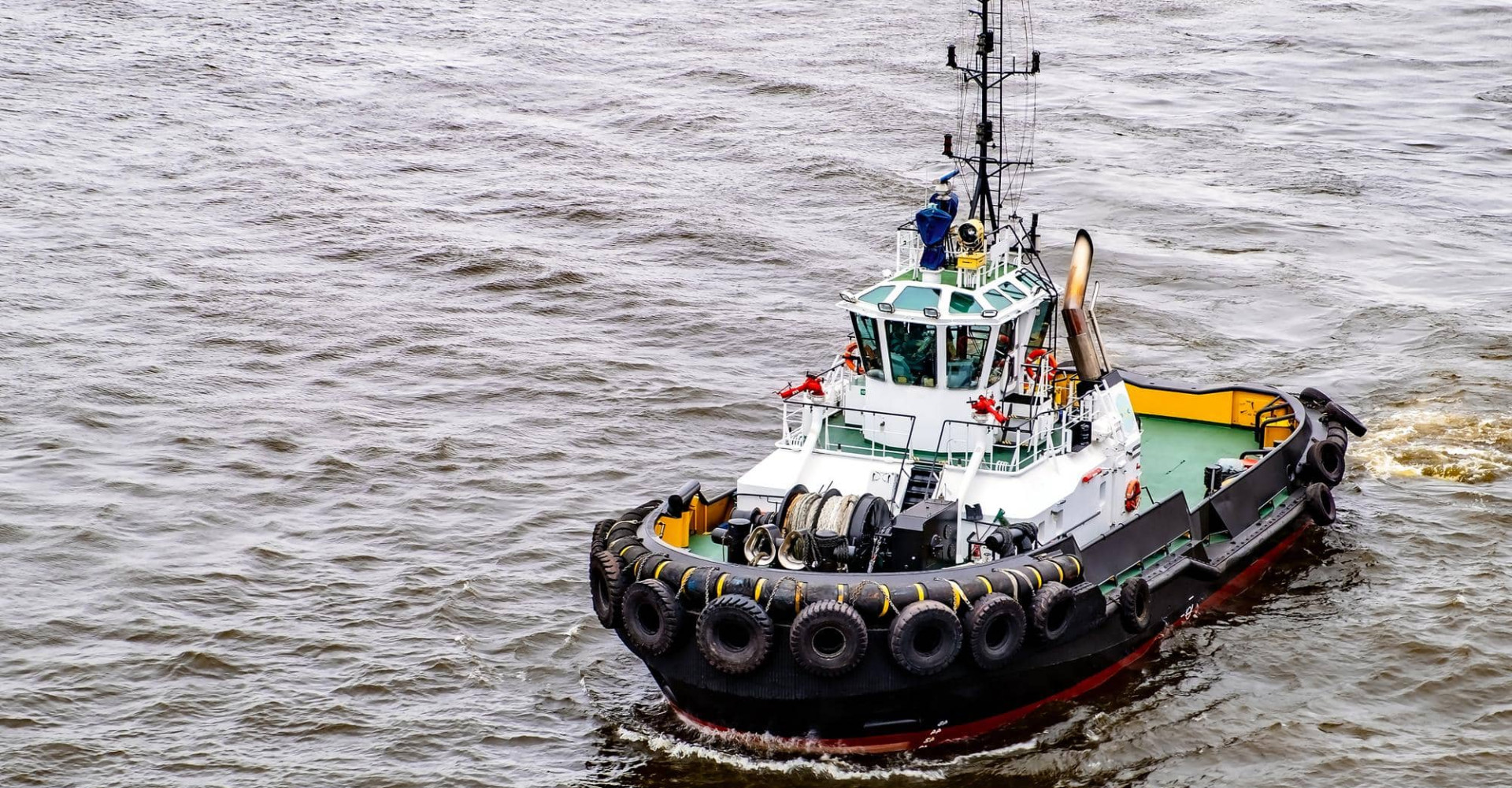
Transporting cargo by water requires vessels that can navigate safely and maneuver efficiently in any conditions. From strong currents and shallow waters to tight spaces in ports and waterways, these challenges often require additional support to ensure smooth vessel operations. This is where tugboats play an essential role. Designed to tow, push, and assist other vessels, tugboats help larger ships maneuver safely, particularly in areas where space is limited or navigation is challenging.
Tugboats come in various types, each with its own characteristics and capabilities, including differences in engine power and propulsion systems. Choosing the right tugboat depends on the waterway conditions and the specific demands of each operation. With the right vessel in place, maritime activities can be carried out more safely, smoothly, and efficiently.
So, what makes tugboats so important in maritime operations? Let’s take a closer look at their functions, different types, how they work, and the key benefits they offer.
What Are the Functions of a Tugboat?
A tugboat is a small but powerful support vessel designed to push, tow, or assist larger vessels, such as barges and ships, during navigation and maneuvering. Also known as a towing vessel, a tugboat plays a vital role in various maritime operations, including:
-
Towing or pushing large ships and barges as they approach or depart from docks and berths.
-
Helping tanker vessels during mooring and unmooring procedures.
-
Assisting vessels in maneuvering safely within ports and other confined waterways.
-
Helping vessels that cannot move under their own power, such as those experiencing mechanical failures.
-
Supporting emergency responses, such as assisting with firefighting, oil spill response, and rescue operations involving vessels in distress or drifting in strong currents.
One of the key performance indicators of a tugboat is its bollard pull, which measures the maximum static pulling force it can exert. This capability enables tugboats to control and maneuver much larger vessels. Their performance is supported by a sturdy hull, a spacious working deck, powerful engines, and advanced control systems, all designed to meet the demands of challenging maritime operations.
Types of Tugboats

The different types of tugboats are classified according to their operating areas and positioning during towing operations. The main types of tugboats include the following:
Harbour Tug
A harbour tug is specifically designed to operate within ports and harbors, where it performs several essential functions, including:
-
Ship escort: Escorting tankers as they navigate designated routes into port.
-
Push operation: Pushing barges or other vessels when required.
-
Berthing assistance: Pushing or pulling vessels as they approach and berth at a dock.
-
Unberthing assistance: Helping control vessel movements when departing from a berth.
-
Emergency handling: Helping restrain or control vessels that have lost maneuverability to reduce the risk of accidents.
Sea-Going Tug
A sea-going tug is designed for long-distance towing operations in open seas and offshore waters.
Its main characteristics include a robust construction, high endurance, excellent stability, and strong resistance to waves. These features allow sea-going tugs to tow large cargo vessels and offshore oil platforms across vast stretches of open water.
River Tug
River tugs operate on rivers characterized by relatively calm currents, shallow waters, and winding channels. They are designed with a shallow draft to prevent grounding and to navigate inland waterways that may be inaccessible to larger vessels.
Their hulls are also typically designed with a box-like shape to support maneuverability when pushing or towing barges.
Pushing Unit
A pushing unit is a type of tugboat specifically designed to push other vessels, particularly cargo-carrying barges.
It may be equipped with rubber fenders or protective padding at contact points where it meets another vessel. These fenders absorb impact and help minimize the risk of hull damage, such as scratches and dents, during pushing operations.
Towing Unit
Unlike a pushing unit, a towing unit is designed to pull other vessels using a towline, which may be made of synthetic fibers or steel wire. This type of tugboat is equipped with a winch, a mechanical device used to pay out, retrieve, and regulate towline tension throughout towing operations.
Side Assist
A side-assist tug helps move or control another vessel by positioning itself alongside the vessel's hull. Protective fenders can be used between the two vessels to absorb impact and minimize the risk of hull damage during operations.
How Do Tugboats Work?
Tugboats generally operate using three main methods, which are:
Direct Towing
Direct towing involves pulling another vessel using a towline connected to the tugboat's towing system, typically through equipment such as a winch. The tugboat applies to a pulling force to assist the vessel in moving or reaching a designated location.
This method is commonly used to assist larger vessels that require additional support when navigating, changing positions, or moving between locations.
Indirect Towing
Indirect towing is a method of assisting a vessel by harnessing the hydrodynamic forces generated on the tugboat’s hull as it moves at an angle to the water flow.
These forces are transferred through the towline to help control the assisted vessel’s direction or reduce its speed. This method is commonly used during escort operations, where tugboats help larger vessels maintain a safe course and speed, particularly in challenging navigational conditions.
Pushing
Pushing involves a tugboat applying direct force to another vessel by positioning its bow against the vessel's hull. To minimize impact and prevent damage, tugboats are equipped with protective fenders around their hulls.
This method is commonly used to assist vessels with maneuvering, particularly when approaching or departing from docks and berths.
Benefits of Using Tugboats
Using tugboats offers several advantages for maritime and cargo transportation operations, including:
-
Improved operational efficiency: Tugboats help larger vessels maneuver, change positions, and navigate in and out of ports more efficiently, allowing vessel movements to be managed with greater control.
-
Reduced risk of damage: By providing controlled pushing and pulling forces, tugboats help guide vessel movements and maintain safe distances from nearby ships and structures. This reduces the risk of collisions when vessels approach or depart from berths and supports safer berthing and unberthing operations.
-
Support across different water conditions: Tugboats are available in various designs and specifications to accommodate different operating environments, ranging from shallow rivers and inland waterways to open seas. This versatility makes them valuable for a wide range of maritime operations.
Efficient Tugboat Solutions from Waruna Group
Tugboats play a vital role in maritime cargo transportation, offering more than just towing and pushing capabilities. These functions work together to support the smooth and reliable movement of various commodities across waterways. For more than 35 years, Waruna Group has supported businesses across industries through its integrated Shipping Services.
Waruna Group provides comprehensive Shipping Services backed by a fleet of hundreds of vessels, including tugboats designed to assist larger ships with berthing, maneuvering, and navigating through confined waterways. The tugboats operated by Waruna Shipping are equipped with engines ranging from 2,000 to 4,400 HP, delivering the power needed to support demanding maritime operations.
Available fleet options include TB MARTHA GREEN (3,200 HP) and TB MEDELIN CITRA (4,000 HP), offering reliable support for a range of operational requirements.
With a diverse fleet and flexible service solutions, Waruna Group is a trusted partner to support your business growth. Contact us today to discuss your shipping requirements and find the right solution with guidance from our experienced professionals.