
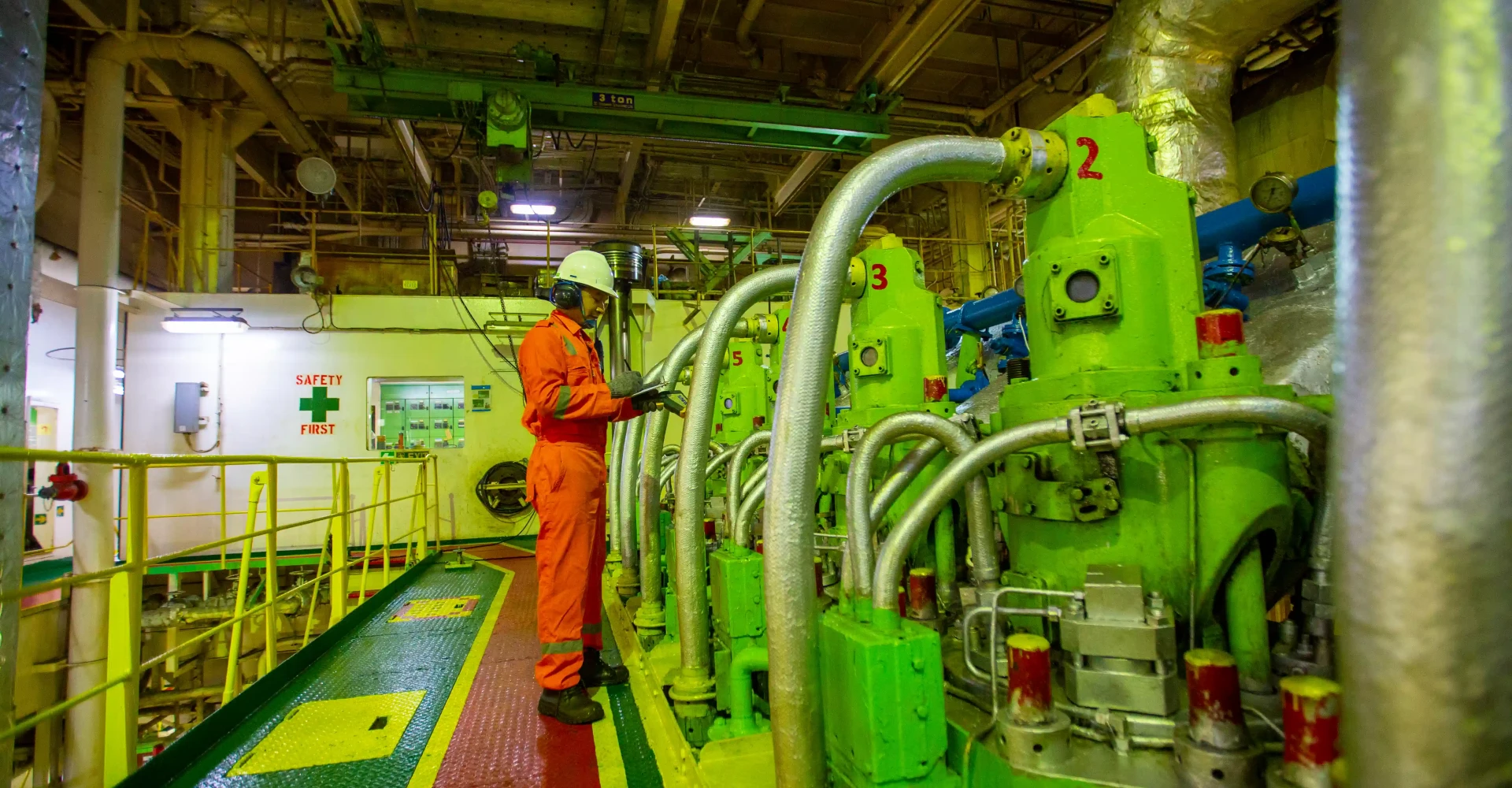
Ship engines are one of the main components that determine the smooth operation of a vessel and its ability to perform its intended functions.
Engine condition needs to be monitored because problems with the propulsion system can affect sailing activities and may require repairs at a shipyard.
Each vessel has different propulsion power requirements, depending on its size, purpose, and operational characteristics. As a result, ship engines come in various types, components, and operating mechanisms that are worth understanding.
So, what should you pay attention to when maintaining marine engines? Find the answers in this comprehensive article!
Ship Engine Components
Marine engines consist of various interconnected components that generate propulsion power and support smooth vessel operations.
Each component has a different function, from the fuel combustion process to transmitting power to the propeller. Below are some of the main ship engine components and their functions:
1. Cylinder Block and Cylinder Head
The cylinder block is the main engine structure that houses the cylinders, where the pistons move up and down during the combustion process.
Meanwhile, the cylinder head is located on top of the cylinder block. It houses the intake and exhaust valves, which regulate the flow of air and exhaust gases produced during combustion.
2. Piston and Piston Rings
The piston moves up and down inside the cylinder due to the pressure generated by fuel combustion, producing engine power.
This component is fitted with piston rings, which maintain a tight seal between the piston and cylinder walls to preserve compression pressure and minimize gas leakage.
3. Crankshaft
The crankshaft converts the piston's reciprocating motion into rotational motion through the force transmitted by the connecting rod. This rotation is then transferred to the propulsion shaft system connected to the vessel's propeller.
4. Connecting Rod
The connecting rod links the piston to the crankshaft and transmits the force generated by the piston to produce rotational motion. This component must be sufficiently strong because it is subjected to pressure and mechanical loads while the engine is running.
5. Fuel Injection System
The fuel injection system regulates the amount and timing of fuel injected into the combustion chamber. This helps ensure that combustion takes place according to the engine's operating requirements, allowing engine power output and fuel consumption to be better controlled.
6. Cooling System
The cooling system maintains the engine temperature within its appropriate operating range by absorbing and dissipating heat while the engine is running. This system helps prevent overheating, which can cause damage to engine components.
7. Exhaust System
The exhaust system directs exhaust gases produced during combustion out of the engine through exhaust ducts or pipes. This system may also be equipped with a muffler to reduce noise while the engine is running.
Read also: Types of Tanker Ships & Their Roles in the Maritime Industry
Types of Ship Engines and How They Work
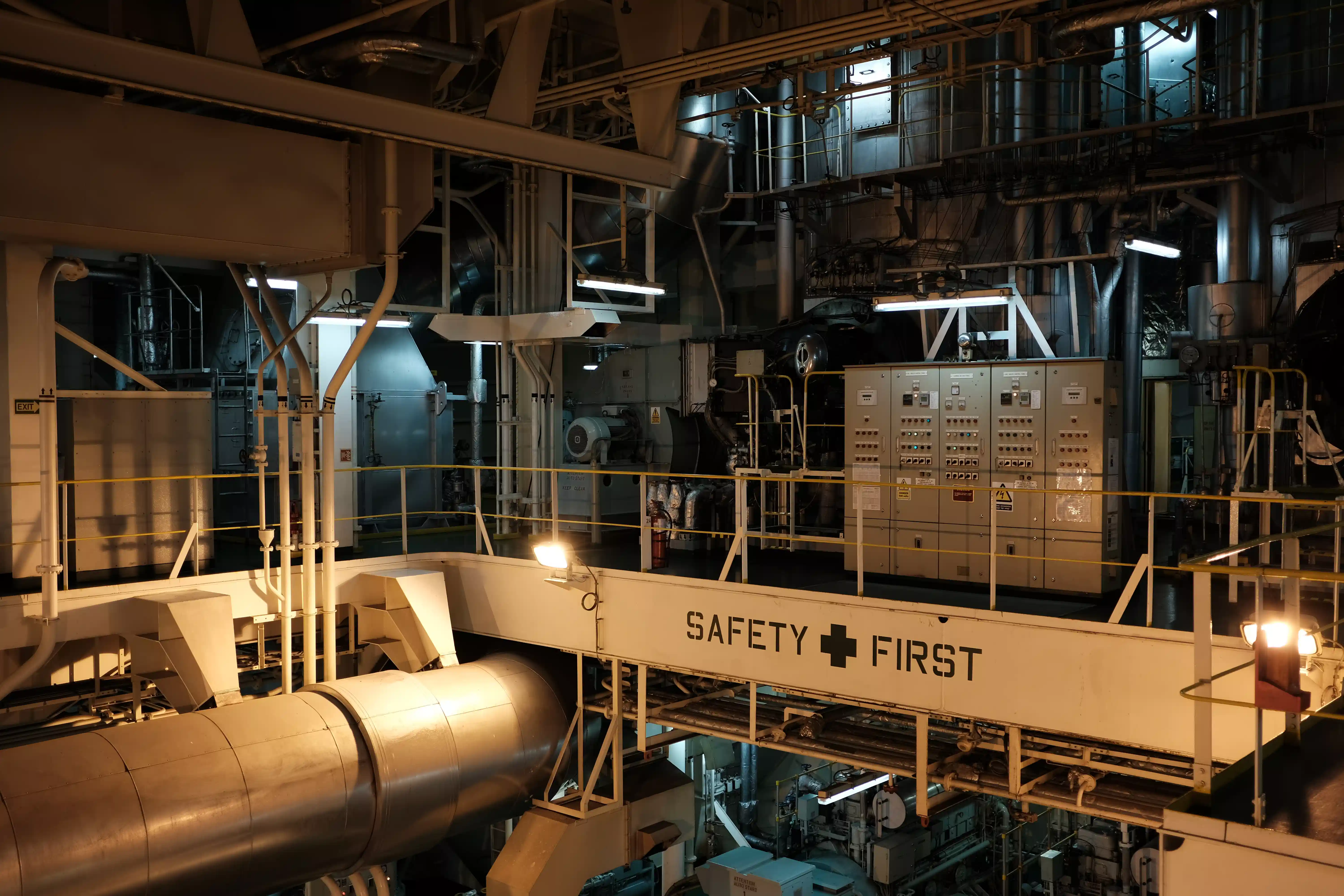
Ship engines come in several types, each with different power sources and operating mechanisms. In general, marine engines can be classified into the following five types:
1. Marine Diesel Engines
Diesel engines are the most widely used type of propulsion engine across various vessels due to their good fuel efficiency and high durability.
This type of engine uses fuel combustion inside the cylinders to generate mechanical power. Tankers are one example of vessels that use diesel engines.
The operating process begins when air enters the cylinder through the intake valve. The air is then compressed by the piston, increasing its pressure and temperature. Diesel fuel is subsequently injected into the combustion chamber, where it ignites due to the high air temperature.
The combustion process generates pressure that pushes the piston. This force is then transmitted through the crankshaft to produce rotational motion. The rotation is subsequently transferred to the vessel's propeller through the propulsion shaft system.
2. Marine Steam Engines
Steam engines were a widely used ship propulsion technology during the early development of maritime transportation. This technology was also commonly used on older generations of tankers before diesel engines became more widely adopted as the primary propulsion system.
This type of engine uses thermal energy to produce high-pressure steam, which is then converted into mechanical power.
The process begins by heating water in a steam boiler until high-pressure steam is generated. The steam is then directed into cylinders to push pistons or drive a turbine.
The resulting motion is converted into rotational power to drive the vessel's propeller. In certain systems, the used steam is cooled and condensed back into water for reuse in the next cycle.
3. Gas Turbine Engines
Gas turbine engines use energy from hot gases produced by fuel combustion to generate rotational power.
One of the main advantages of this engine type is its ability to deliver high power output while maintaining a relatively low weight and providing quick start-up times.
For this reason, gas turbines are widely used in warships, patrol vessels, and high-speed craft that require substantial power and high speeds.
The process begins when the compressor draws in and compresses air to a high pressure. The compressed air is then mixed with fuel and burned inside the combustion chamber.
The resulting hot gases flow through the turbine, causing it to rotate. The turbine's mechanical power is then transmitted to the propulsion system to drive the vessel's propeller.
4. Marine Electric Motors
Electric propulsion systems use electric motors to generate rotational power that drives a vessel's propeller. This type of propulsion system is generally characterized by smoother and quieter operation.
The electricity can be supplied by diesel generators, gas turbine generators, or batteries, depending on the propulsion system design.
During operation, electrical energy flows to the motor, generating an electromagnetic field that drives the rotor. The rotor's movement produces mechanical energy in the form of rotation, which is then transmitted to the propeller shaft.
With this mechanism, electric motors can generate propulsion power without directly burning fuel inside the motor itself.
5. Nuclear Marine Propulsion
Nuclear propulsion uses thermal energy from nuclear fission reactions inside a nuclear reactor to generate propulsion power.
This type of propulsion system can provide substantial power and support long-term vessel operations without requiring frequent refueling.
This technology is generally used in submarines and military aircraft carriers that require high power output, rather than commercial vessels.
The process begins with nuclear fission reactions that generate heat inside the reactor.
This heat is used to warm water through a heat transfer system, producing high-pressure steam. The steam is then directed through a turbine to generate mechanical power.
The turbine's rotation is subsequently used to drive the vessel's propeller, either through a propulsion shaft system or through an electric generator and motor, depending on the design of the propulsion system.
Read also: 5 Tanker Ship Sizes Every Shipping Business Must Know
Things to Consider in Ship Engine Maintenance
Ship engines need to be maintained regularly to keep them in good condition and ensure smooth vessel operations.
Engine maintenance is carried out by the vessel's engine department personnel in accordance with their respective responsibilities and applicable operating procedures. For specialized repair work, assistance may be required from shipyard technicians and specialists.
There are several important factors to consider when maintaining ship engines, including:
- Lubrication System Inspection: Ensure that oil levels and quality are maintained to prevent friction between components from accelerating engine wear.
- Engine Filter Condition: Check the cleanliness of air, fuel, and oil filters to ensure that flow through each system is not obstructed.
- Fuel and Exhaust System Inspection: Make sure there are no leaks in the fuel lines and monitor changes in exhaust smoke that may indicate engine problems.
- Component and Auxiliary System Inspection: Check the condition of pumps, injectors, turbochargers, electrical installations, and other engine components to detect damage at an early stage.
- Component Replacement Based on Service Life: Monitor the condition and service life of components such as seals, O-rings, bearings, and valves so they can be replaced before further damage occurs.
Read also: The World's Largest Tankers, Including One from Indonesia!
Handle Ship Engine Repairs & Machining Work with Shipyard Service by Waruna Group
Ship engines need proper maintenance and attention to ensure smooth vessel operations. In addition to routine maintenance, machining work may also be required during vessel construction or repair.
In this regard, Waruna Group, through PT Waruna Shipyard Indonesia (WSI), provides Shipyard Services supported by seven docks to handle various vessel-related requirements.
We have been active in Indonesia's maritime industry for more than 35 years, providing facilities and services for a wide range of vessels.
One of the services available at our shipyard is machining, which covers various types of material and vessel component processing.
This work is supported by specialized equipment, including lathes, hobbing machines, and crankshaft grinding facilities.
WSI also provides on-site machining services using portable equipment to handle specific jobs directly on-board vessels.
In addition to machining, WSI's Shipyard Services cover several other areas of work, including mechanical services, blasting and painting, and lifting equipment.
All these services have been supported by the consistent implementation of ISO 9001 and ISO 45001 management systems since 2015. These two standards relate to quality management and occupational health and safety.
Their implementation is part of WSI's efforts to maintain work quality while prioritizing safety throughout shipyard operations.
Alongside its Shipyard Services, Waruna Group also provides Shipping Services with a fleet of more than 150 vessels of various types. The fleet includes oil tankers, LPG tankers, bulk carriers, harbor tugs, tugs and barge units, and cement carriers.
These vessels support the transportation of energy and commercial commodities to various regions across Indonesia, including areas that rely on maritime transportation for distribution. Waruna Group's service coverage also extends to energy distribution across the ASEAN region and other destinations.
Through its shipyard and shipping services, Waruna Group supports various maritime industry requirements, from vessel work at shipyards to cargo transportation.
Don't let ship engine problems disrupt your vessel operations. Contact our team to discuss your machining and vessel repair requirements and take advantage of our Shipyard Services.