
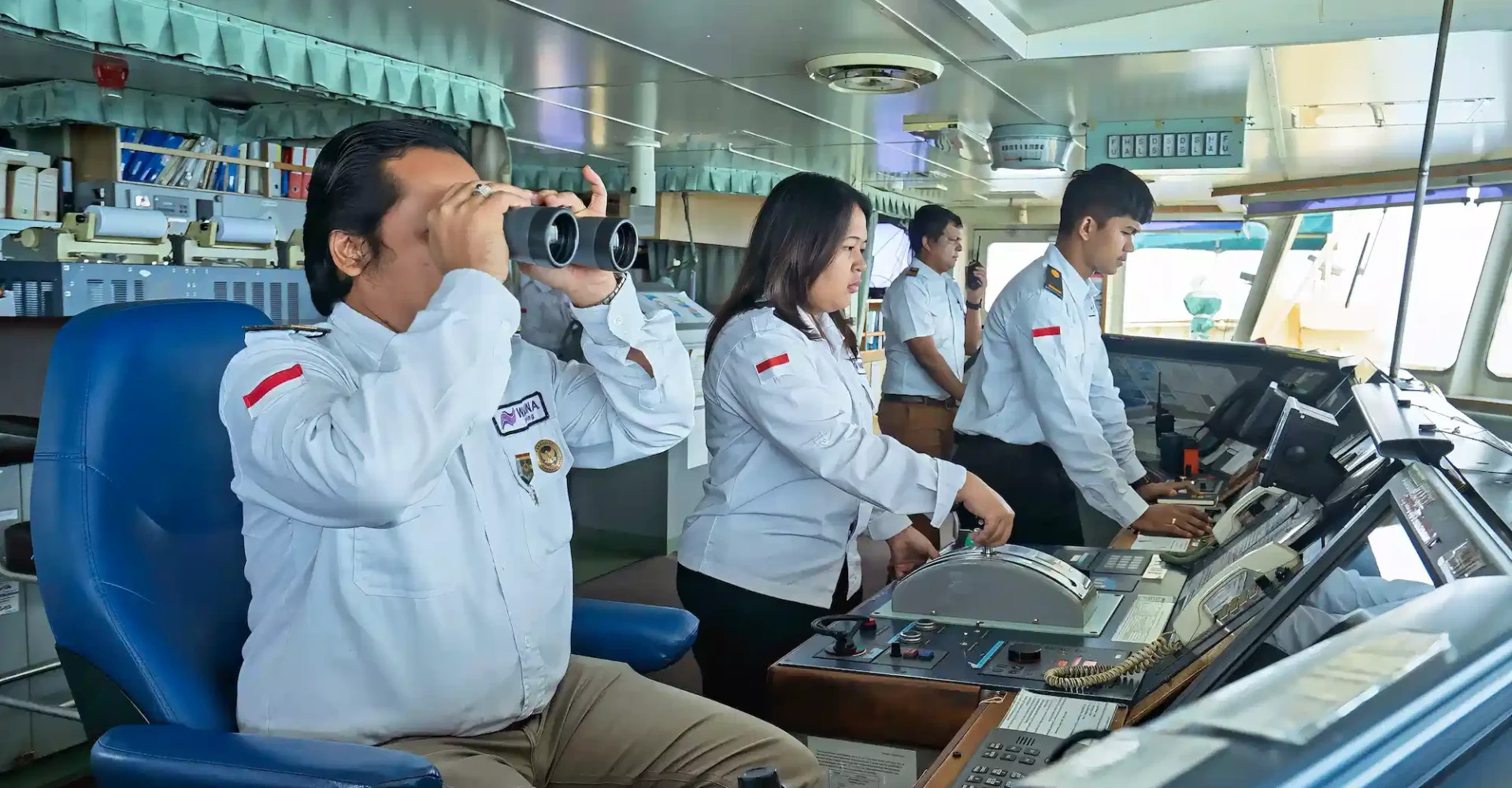
Changing a vessel course at sea requires a steering system that can operate accurately and respond effectively.
This capability is one of the key factors in ensuring smooth and safe navigation, particularly when vessels need to maneuver through waters with varying conditions.
As part of a vessel navigation system, the steering system controls its direction of movement. It is essential for various types of vessels, including tankers, tugboats, and other commercial ships.
Each vessel requires a steering system suited to its design and operational needs. So, how is this system designed, and how does it work to support vessel navigation? Find out more about it in the following article!
What Is a Ship Steering System?
A ship steering system is an essential part of a vessel's navigation system. It controls the vessel's direction of travel and allows it to maneuver during a voyage.
The system enables the vessel to turn to port (left) or starboard (right) based on the helmsman's input through the steering controls on the bridge.
By controlling the vessel heading, the steering system helps keep it on its intended course and allows it to avoid obstacles along the way.
To better understand the appearance and position of the steering components on a vessel, look at the following image:
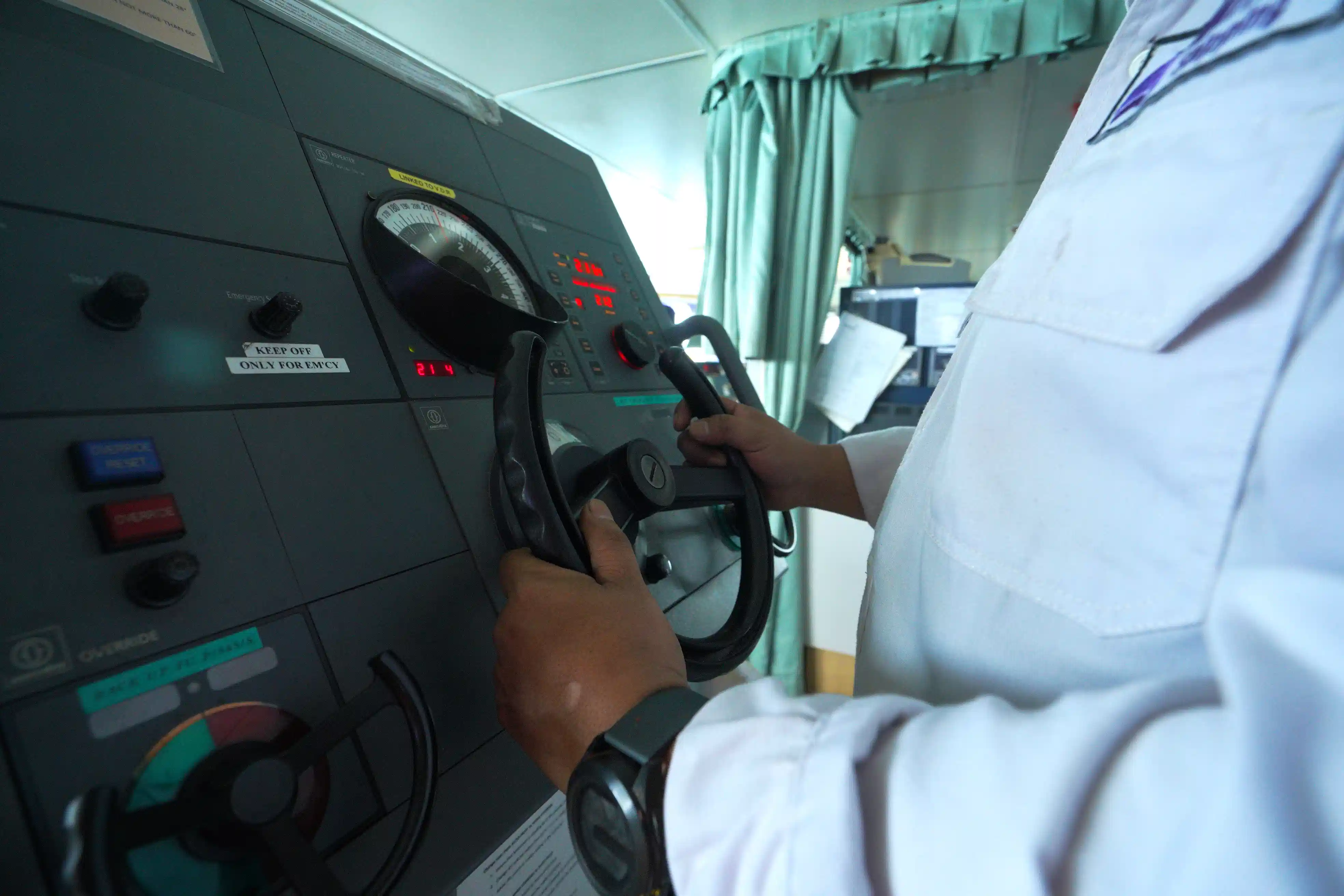
During operation, a ship steering system must be built to withstand demanding marine conditions and provide reliable performance throughout the voyage.
The requirements for steering gear are outlined in the International Convention for the Safety of Life at Sea (SOLAS) 1974, Chapter II-1 on Construction, particularly Regulation 29, which covers Steering Gear.
This regulation specifies the technical requirements for both main and auxiliary steering gear, including their performance and strength to ensure effective vessel control.
In addition to SOLAS 1974, steering gear standards are further addressed in IMO Resolutions A.415(XI) and A.416(XI), both adopted on November 15, 1979.
Resolution A.415(XI) covers improved steering gear standards for passenger ships and cargo ships, while Resolution A.416(XI) addresses the inspection of steering gear on existing tankers.
Components of a Ship Steering System
A ship's steering system consists of several interconnected components that transmit steering commands and control changes in the vessel's direction. Here are some of the components you must know:
- Steering Wheel: The component operated by the captain or helmsman to command changes in the vessel's direction. Turning the steering wheel sends signals to the control system, which adjusts the rudder angle.
- Telemotor/Control Unit: This component receives and transmits commands from the steering wheel to the steering gear. It ensures that directional commands are processed by the steering system.
- Power Unit: It supplies the power needed to operate the steering gear. In hydraulic systems, it typically consists of a hydraulic pump driven by an electric motor to generate fluid pressure.
- Actuator: A device that converts power from the drive unit into mechanical movement to turn the rudder stock. Actuators may use hydraulic ram mechanisms or rotary vane systems.
- Rudder Stock: The shaft that connects the steering mechanism to the rudder. It transfers movement from the actuator, allowing the rudder to change position according to the steering command.
- Rudder: A component located beneath the vessel's stern that directs water flow to generate a force that changes the vessel's direction. Adjusting the rudder angle allows the vessel to turn in the desired direction.
- Feedback Mechanism: A system that monitors the rudder's position and compares it with the commanded angle. This mechanism helps ensure that the rudder moves according to the steering commands.
- Auxiliary Steering Gear: A backup system used when the main steering gear malfunctions or becomes inoperable. It helps maintain the vessel's steering capability in emergency situations.
Read also: Tugboats: Small Vessels with a Vital Role in Maritime Industry
Types of Ship Steering Systems
Ship steering systems can be classified based on the mechanisms they use to transmit steering commands and move the rudder. Below are some of the most common types used in vessel operations:
1. Mechanical Steering System
A mechanical steering system uses a series of components, such as shafts, gears, chains, or cables, to transmit movement from the steering wheel to the rudder.
This system has a relatively simple design and is generally used on smaller vessels or as a backup steering system.
2. Hydraulic Steering System
A hydraulic steering system uses fluid pressure to operate an actuator connected to the rudder.
Hydraulic pressure allows the system to generate significant force while providing smooth movement, making it suitable for larger vessels.
3. Electro-Hydraulic Steering System
This system combines electronic controls with a hydraulic drive mechanism. Commands from the steering wheel are received by sensors and a control unit, which then regulate the hydraulic pump to move the rudder with greater precision.
4. Ram-Type Steering Gear
A ram-type steering gear uses one or more hydraulic cylinders to move the rudder's stock through a mechanical linkage.
This system can generate substantial force, making it widely used on large vessels with heavy rudders.
5. Rotary Vane Steering Gear
This system uses a rotor and stator mechanism that relies on hydraulic pressure to produce rotational movement.
The rotor is directly connected to the rudder stock, allowing it to change the rudder position without requiring the cylinders and connecting rods used in ram-type steering gear.
Read also: Types of Tanker Ships & Their Roles in the Maritime Industry
How a Ship Steering System Works
A ship's steering system operates through a series of processes that connect the helmsman's commands to the movement of the rudder at the stern.
This process involves several interconnected components that work together to convert steering commands into physical movement, allowing the vessel to turn in the intended direction. The following are the steps involved in how a ship steering system works:
1. Steering Input Through the Steering Wheel (Helm)
The process begins when the captain or helmsman turns the steering wheel on the bridge to set the vessel's course. This movement serves as the initial command, which is then transmitted to the steering control system.
2. Command Transmission to the Control System
The steering command from the wheel is received by the control unit or telemotor. This component transmits the command to the drive unit based on the steering mechanism used, whether mechanical, hydraulic, or electro-hydraulic.
3. Actuator and Rudder Stock Movement
Once the command is received, the drive unit supplies the power needed to operate the actuator. The resulting movement is then transmitted through the rudder stock, causing the rudder to move to the commanded position.
4. Rudder Movement
The rudder at the stern rotates to a specific angle. This change in position affects the flow of water around it, generating hydrodynamic forces that help change the vessel's direction.
5. Rudder Position Monitoring and Adjustment
In modern steering systems, sensors and feedback mechanisms monitor the rudder's position during operation. This information helps ensure that the rudder remains at the angle commanded by the helmsman.
Read also: Shipyards as Strategic Infrastructure for the Shipping Industry
Charter the Most Reliable Vessel for Energy & Commodity Distribution in Waruna Group
Waruna Group has supported Indonesia's maritime industry for more than 35 years, helping facilitate energy distribution across various regions in Indonesia, the ASEAN region, and other destinations.
Through its Shipping Services, Waruna offers more than 150 vessels available for charter, including oil tankers, LPG tankers, bulk carriers, harbor tugs, tugboats and barges, and cement carriers. These vessels support the transportation of energy and commercial commodities by sea.
The availability of vessels across various classes also supports maritime distribution operations, including deliveries to key locations and regions that rely on a consistent energy supply.
Meet your vessel chartering needs and support your business operations by contacting the Waruna Group team today!