
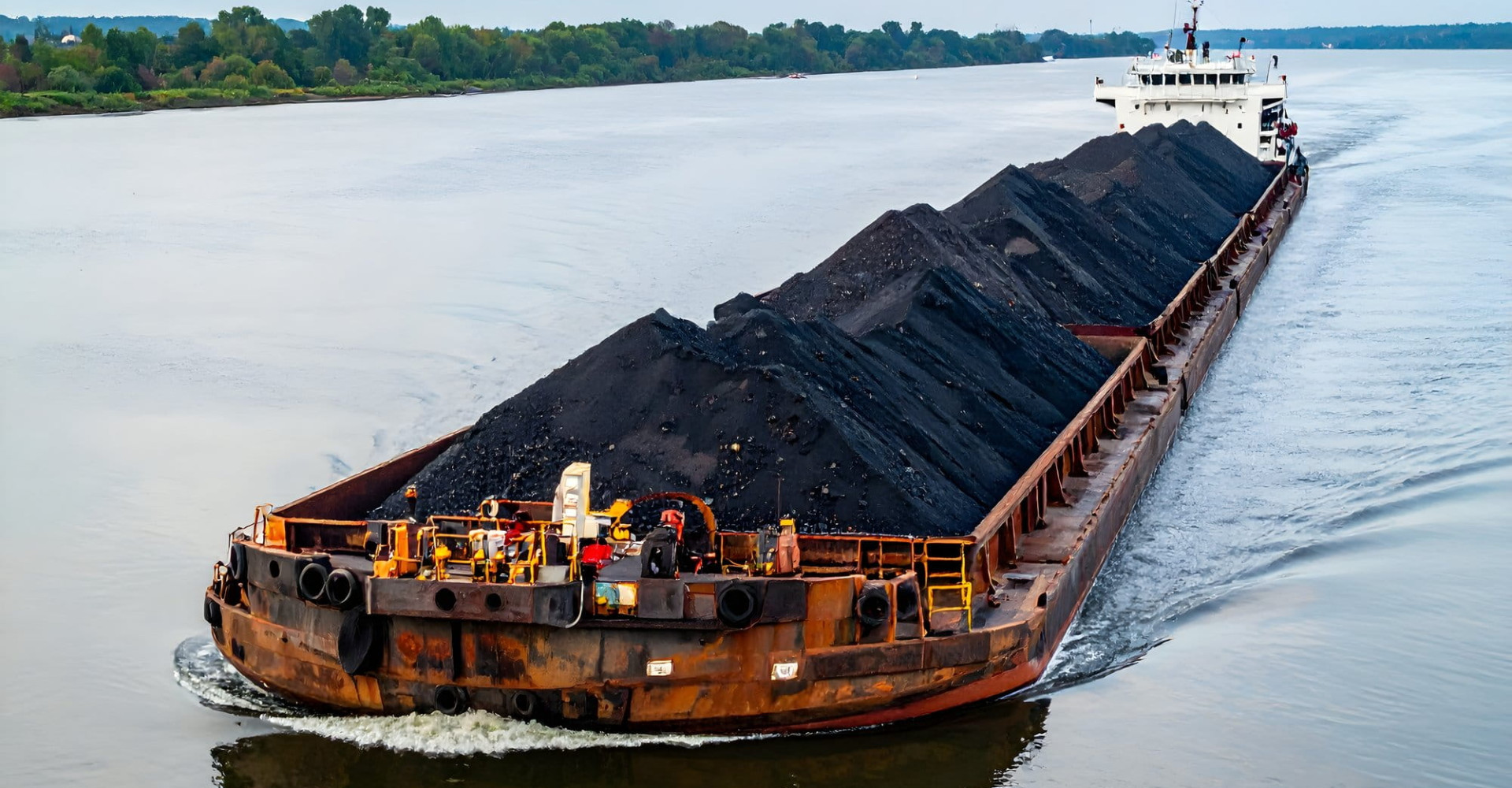
When choosing a transportation method for coal distribution, companies need to consider several factors, including cargo capacity, waterway accessibility, operational flexibility, and cost efficiency. For transporting large volumes of coal, barges are a widely used solution.
But what makes coal barges well-suited for bulk coal transportation? Explore their key characteristics, advantages, and how they help improve the efficiency of coal distribution in the following overview.
Characteristics of Coal Barges
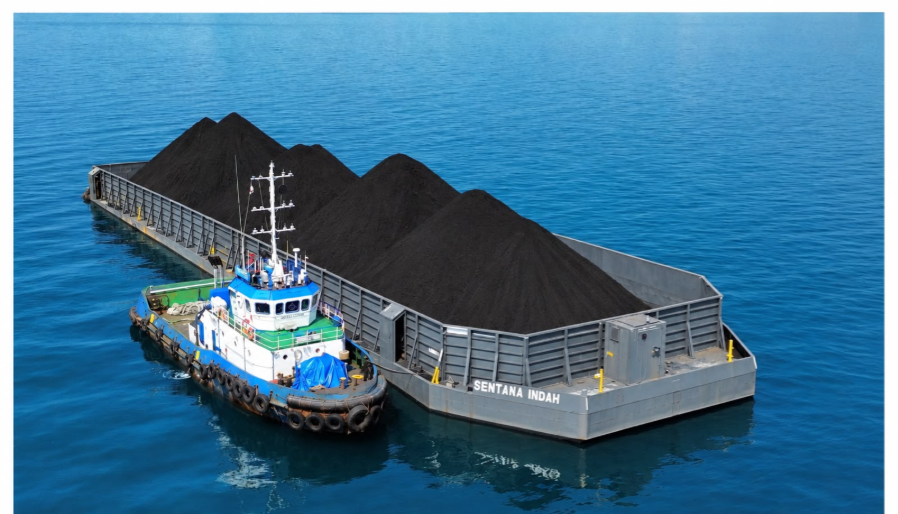
Before exploring the different types of coal barges and how they operate, let’s take a closer look at their key characteristics:
- They have a sturdy construction and a spacious deck.
- Their hulls are strong and stable in the water, with a relatively flat bottom.
- They feature relatively high steel partition walls along the edges of the deck.
- Most coal barges are not equipped with their own propulsion systems, so they require tugboats to move toward their destinations.
- They come in various sizes and capacities, ranging from 180, 230, 270, 300, to 330 feet. Waruna Group, as one of Indonesia’s leading providers of commodity shipping services, offers barges ranging from 250 to 300 feet in length.
Types of Coal Barges
To meet diverse transportation needs, coal barges come in several types, which are classified based on whether they have cargo hold covers and their propulsion systems. Here are the details:
Open Hopper Barge
Open hopper barges are a type of coal barge without covers, allowing cargo to be loaded directly into the hold.
On this type of barge, the cargo can be loaded above the height of the upper deck and hatch coaming. As a result, it is common for the cargo to appear piled up in a mound.
Closed Hopper Barge
In contrast to the first type, closed hopper barges have covered hatches, similar to bulk carriers.
These barges are generally used to transport cargo that is susceptible to damage from environmental exposure, such as heat, cold, snow, or rain, as well as cargo that is at risk of being lost during storms or cyclones.
Self-Propelled Barge
A self-propelled barge is a type of coal barge equipped with its own propulsion system, allowing it to move without being towed by a tugboat.
This type of barge uses a diesel engine to drive a propeller, which moves the vessel through the water. The engine is generally located at the rear of the vessel, with the propeller positioned behind it.
Dumb Barge
As explained earlier, most coal barges do not have their own propulsion systems, so they need to be moved by tugboats or workboats. This type of vessel is known as a dumb barge or a tug-and-barge.
Dumb barges offer several advantages, including large cargo capacity, the ability to reach remote locations, and a stable deck. What's more, their size, deck layout, buoyancy, and cargo capacity can also be customized to meet specific project requirements.
How Coal Barges Operate
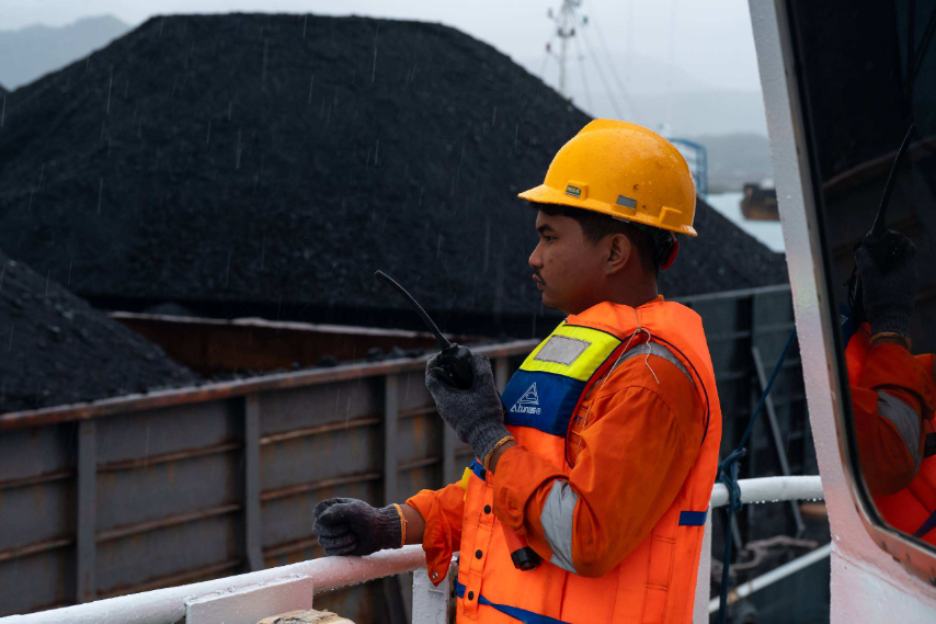
The operating process for coal barges can vary depending on the location, water conditions, delivery destination, and loading facilities. However, the general process involves the following steps:
Coal Collection at the Stockpile
Before being transported by barge, coal is first collected at a stockpile, a temporary storage area located near a mine or coal terminal.
In addition to serving as a temporary holding area, stockpiles help homogenize coal quality from different sources and maintain coal availability during market fluctuations or disruptions caused by extreme weather.
Loading Coal onto the Barge
Once the coal has been collected, the barge berths at the jetty. The coal is then loaded onto the barge using loading equipment such as grab loaders, belt conveyors, excavators, or other equipment available at the site. The equipment used depends on the terminal's infrastructure and handling capacity.
One piece of equipment commonly used at large-scale terminals is the belt conveyor, a long rubber belt that moves over idler rollers. Belt conveyors can handle materials of various sizes and transport them continuously.
The Barge Travels to the Port of Delivery
Once loading is complete, the barge begins its journey to the port of delivery, the destination where the coal is needed. This may be a port, a receiving jetty, a mother vessel, or a transshipment point where the coal is transferred to a larger vessel.
For dumb barges, the vessel is towed or pushed by a tugboat. Self-propelled barges, on the other hand, travel using their own diesel engines and are operated by a captain from the wheelhouse at the front of the vessel.
Transshipment
Upon arrival at the destination, the coal can be unloaded directly at receiving facilities, such as power plant jetties or industrial ports, for use or further processing.
If the shipment involves transshipment, the coal is transferred from the barge to a mother vessel using a floating crane before continuing its journey to the next destination.
The smooth execution of each stage depends on coordinated vessel schedules, barge readiness, and the availability of loading and unloading facilities. If coordination is not optimal, the transportation process may encounter bottlenecks or operational constraints that slow down the overall workflow.
Delays in loading or unloading that exceed the laytime specified in the contract may also result in demurrage charges.
Therefore, close coordination among all parties involved is essential to prevent bottlenecks and demurrage, which can disrupt operations and lead to financial losses.
Why Are Barges Suitable for Coal Distribution?
Coal mining companies and traders often rely on barges to transport coal, particularly along rivers and coastal waterways. This is no surprise, as coal barges offer several advantages, including:
- Large cargo capacity: Barges can carry thousands of tons of coal on a single trip. This helps reduce the frequency of shipments and improves the efficiency of bulk cargo transportation.
- Cost efficiency: With their large carrying capacity, barges can help lower coal transportation costs and make bulk distribution more cost-effective.
- Access to rivers and shallow waters: Their flat-bottomed hulls allow coal barges to navigate certain waterways that may be inaccessible to larger vessels.
- Support for transshipment operations: Barges can transport coal from loading points to transshipment locations, where the cargo is transferred to a mother vessel for onward shipment. This allows coal distribution to continue even when larger vessels cannot berth directly at the loading site.
- Flexible and relatively economical operations: Coal barges are available in various sizes to accommodate different cargo volumes, water depths, and port facilities.
Waruna Group: A Trusted Coal Barge Provider in Indonesia
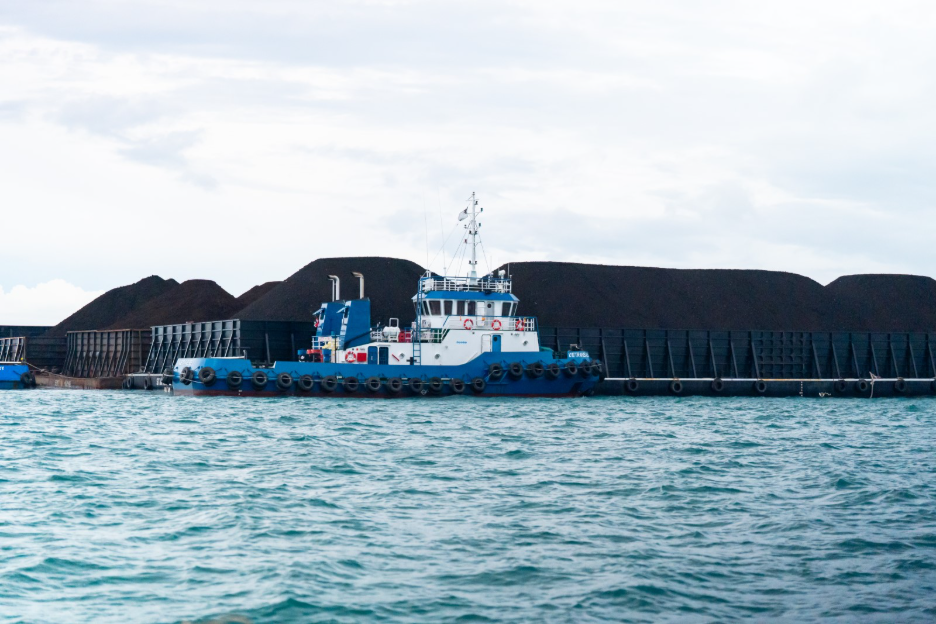
As discussed previously, smooth coal distribution depends on several factors, including vessel scheduling coordination and the availability of loading and unloading facilities. It is also important to choose a fleet that matches your company's cargo capacity requirements and operational conditions.
To meet these needs, companies should partner with a reliable shipping provider with an adequate fleet, such as Waruna Group.
With more than 35 years of experience in Indonesia's shipping and shipyard industries, Waruna Group provides transportation services for various commodities to key locations across Indonesia.
Waruna Group offers integrated Shipping Servives supported by hundreds of vessels, including barges and tugboats. Through PT Asia Mulia Transpasifik, Waruna operates 12 tugboat-and-barge sets. Its tugboats have engine power of up to 2,400 HP, while its barges range from 230 to 300 feet in length.
Available fleet options include TB MARTHA SYSTEM paired with TK SENTANA BALAST (300 feet), TB MARTHA III paired with TK SENTANA III (230 feet), TB MARTHA DINI paired with TK SENTANA V (270 feet), and many others.
If your company is looking to optimize its coal distribution operations and find the right fleet for its needs, contact our team now!