
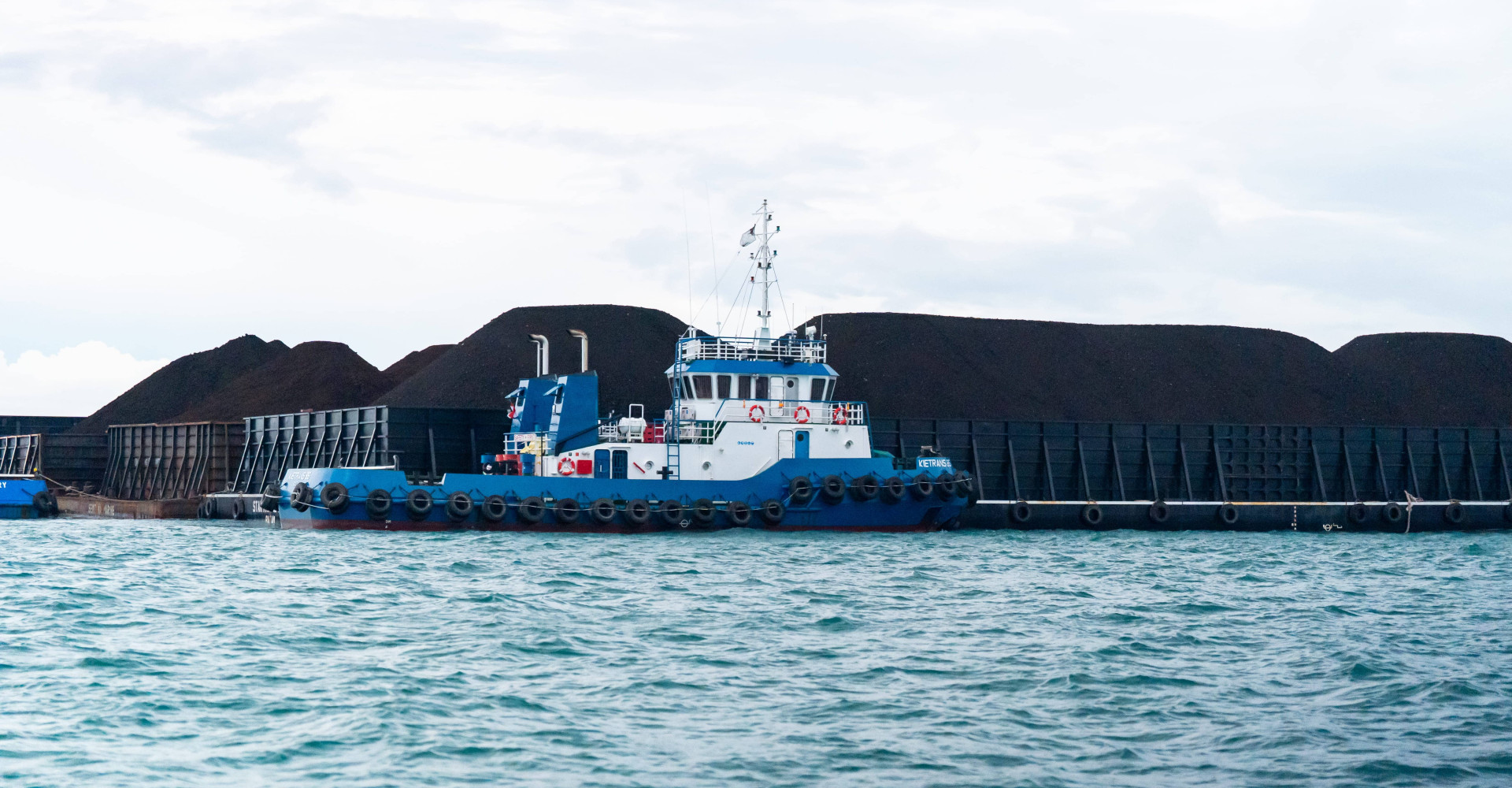
For businesses handling large quantities of commodities such as coal, minerals, or oil, efficiency is an essential part of their operational strategy. Barges are one of the most widely used modes of transportation for carrying these types of cargo.
If you look at a picture of a barge, you will notice that its shape differs significantly from that of a conventional seagoing vessel, which typically has a pointed bow. Most barges also require the assistance of other vessels to support their operations.
Want to learn more about the functions, types, regulations, and routes of barges in Indonesia? Read on to find out!
What Is a Barge?
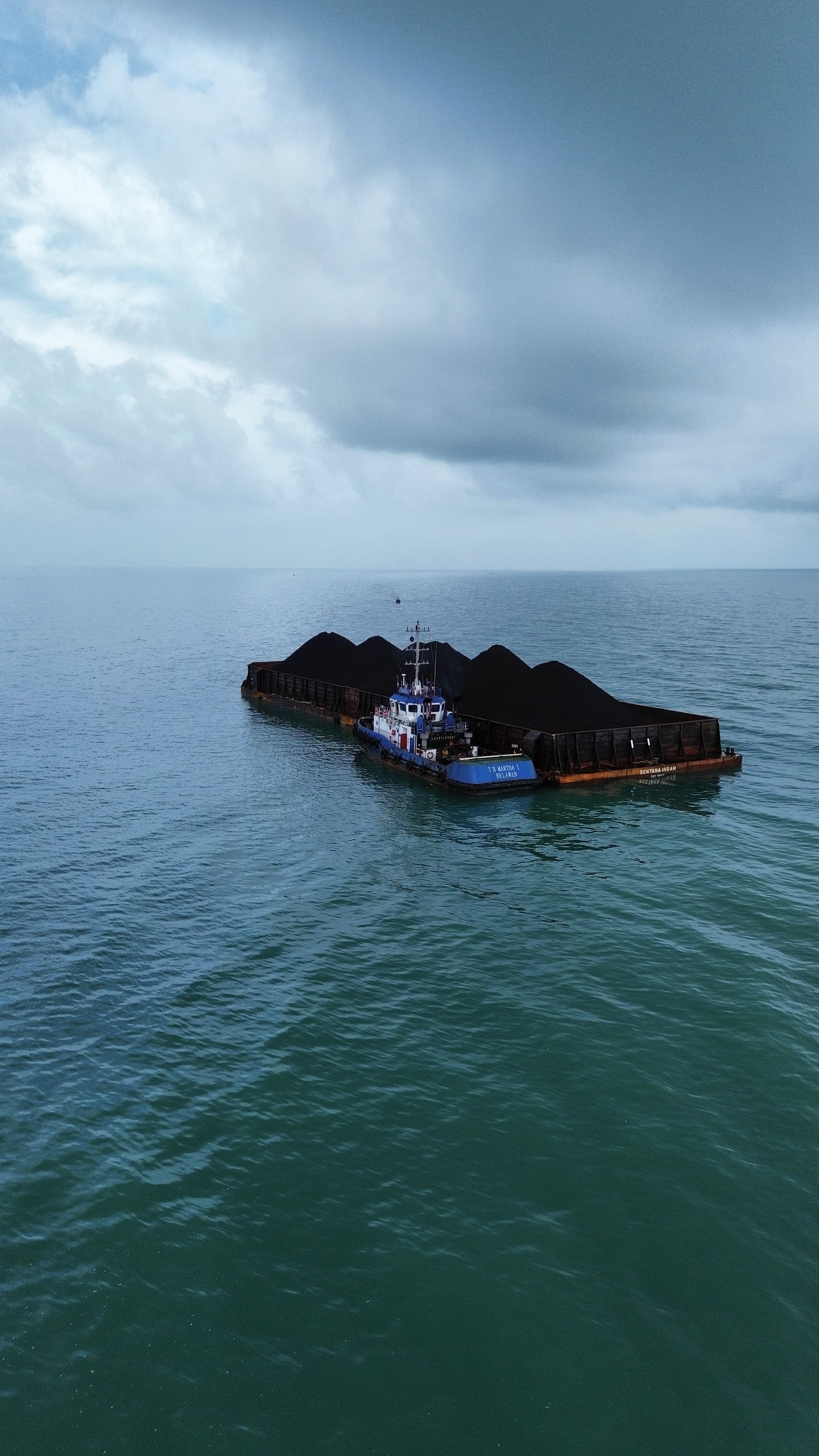
A barge is a type of vessel designed to transport bulk and heavy cargo. In the shipping industry, it is also commonly referred to as a barge or cargo barge. Its primary purpose is to improve the efficiency of transporting large volumes of goods.
Barges are classified as non-self-propelled vessels, meaning they do not have their own propulsion systems. Instead, they are equipped with special ropes or towing lines that connect them to a tugboat, which pulls them from the front or pushes them from behind.
Here are some key characteristics of barges you should know:
-
Typically 55–100 meters long and 16–24 meters wide.
-
Feature a flat, wide shape with an open deck.
-
Made of steel or aluminum.
-
Cargo capacity depends on the barge's size and specifications. For example, a 230-foot barge can carry approximately 3,000 metric tons (MT), a 270-foot barge around 5,000 MT, and a 300-foot barge approximately 7,500–8,000 MT.
-
Do not have their own crew, as personnel operate from the tugboat towing them.
-
Relatively easy to maneuver through river channels due to their smaller size compared to seagoing vessels.
Functions of Barges
Barges has have a crucial role in maritime distribution thanks to their ability to transport large cargo volumes efficiently. Below are some of the common types of cargo transported by barges and the activities they support:
-
Construction materials, such as stone, sand, and cement.
-
Fuel and liquid cargo, such as diesel, crude oil, and CPO (crude palm oil).
-
Coal and minerals, such as nickel and iron ore.
-
Heavy equipment, such as excavators, bulldozers, and dump trucks.
-
Offshore operations (logistics activities that support operations in offshore areas) and transshipment (the transfer of cargo between vessels).
Types of Barges in Shipping

Based on their functions and the cargo they carry, barges can be divided into several types, as outlined below.
1. Coal Barges
As the name suggests, coal barges are used to transport large quantities of coal from production sites to major ports or processing facilities. Along the edges of their decks, they feature steel retaining walls to prevent piles of coal from shifting when the vessel is rocked by waves.
These barges are generally towed by tugboats or coupled with other coal-carrying vessels to form a transportation formation or convoy.
2. Liquid Cargo Barges
Vessels designed to transport liquid cargo are known as liquid cargo barges. Their cargo includes crude oil, petrochemicals, liquid fertilizers, and other industrial liquid chemicals.
To prevent leaks, these barges are equipped with specialized tanks and stringent safety systems, such as advanced pumping and temperature control systems.
3. Wooden Barges
Since they carry heavy and bulky timber, wooden barges feature long, spacious open decks, flat bottoms, and robust buoyancy systems. These features help ensure that stacks of logs remain secure and afloat while being transported across waterways.
Wooden barges are generally found in shallow waters, such as river mouths and rivers.
4. Mud Barges
When businesses in the maritime industry need to transport mud generated by offshore oil drilling operations, mud barges are often the preferred vessels.
These barges are equipped with pumping and piping systems to transfer mud, as well as several compartments to store it safely.
5. Car Barges
Need to transport large quantities of cars, trucks, or heavy vehicles by water? Car barges are the solution.
Their decks are designed to be wide and flat, allowing vehicles to enter and exit easily via ramps or designated access points. However, it is important to note that car barges operate exclusively in domestic waters.
6. Ocean-Going Barges
Ocean-going barges are designed for longer sea voyages and more challenging marine conditions.
Their structures and construction are reinforced to withstand waves in open waters. These vessels must also undergo regular corrosion inspections and cargo-lashing system adjustments due to the relatively high salt content of seawater.
7. Crane Barges
The final type on this list is the crane barge. These vessels are equipped with cranes for offshore operations and other heavy-duty activities.
Interestingly, crane barges are equipped with propellers and independent propulsion systems, allowing them to move without relying on tugboats. They are also commonly used for dredging, marine salvage operations, and offshore infrastructure installation.
Barge Routes in Indonesia
Barge operations are commonly found in regions with large-scale mining and plantation activities. Some of the major waterways frequently used for barge transportation in Indonesia include:
-
Barito River, South Kalimantan: This river serves as a transportation route for coal from mining areas in South Kalimantan to loading ports.
-
Mahakam River, East Kalimantan: One of the key routes for transporting coal from inland mining areas of Kalimantan to ports in Samarinda and Balikpapan.
-
Musi River, South Sumatra: The Musi River is frequently used to transport coal from mining areas, including the area around Tanjung Enim, to Boom Baru Port and oil refinery facilities in Plaju. In addition to coal, barges operating along this route also commonly transport agricultural products and construction materials.
Barge Shipping Services by Waruna Group
As explained above, barges play a vital role in supporting logistics chains across various industries. Choosing the right vessel also requires consideration of the type of cargo, route characteristics, and applicable operating regulations to ensure optimal and efficient transportation.
If your business is looking for a fleet to support distribution via sea routes, Waruna Group offers integrated solutions through its Shipping Services division to support the distribution of business commodities across key locations throughout Indonesia.
Waruna Group has been a trusted maritime partner in Indonesia for more than 35 years. This extensive experience has further strengthened the group's track record in supporting energy distribution to remote areas across the country, as well as to ASEAN countries and other destinations. Waruna Group operates hundreds of vessels, including barges.
Through PT Asia Mulia Transpasifik, Waruna Group operates 12 tugboat-and-barge sets, with tugboats of up to 2,400 HP and barges ranging from 230 to 300 feet in length. Available barges include TB MARTHA SYSTEM with TK SENTANA BALAST (300 feet), TB MARTHA I with TK SENTANA ASIA (300 feet), TB MEDELIN I with TK SENTANA MARINE (300 feet), and many others.
If you would like to discuss shipping solutions best suited to your business needs, feel free to contact the Waruna Group team.