
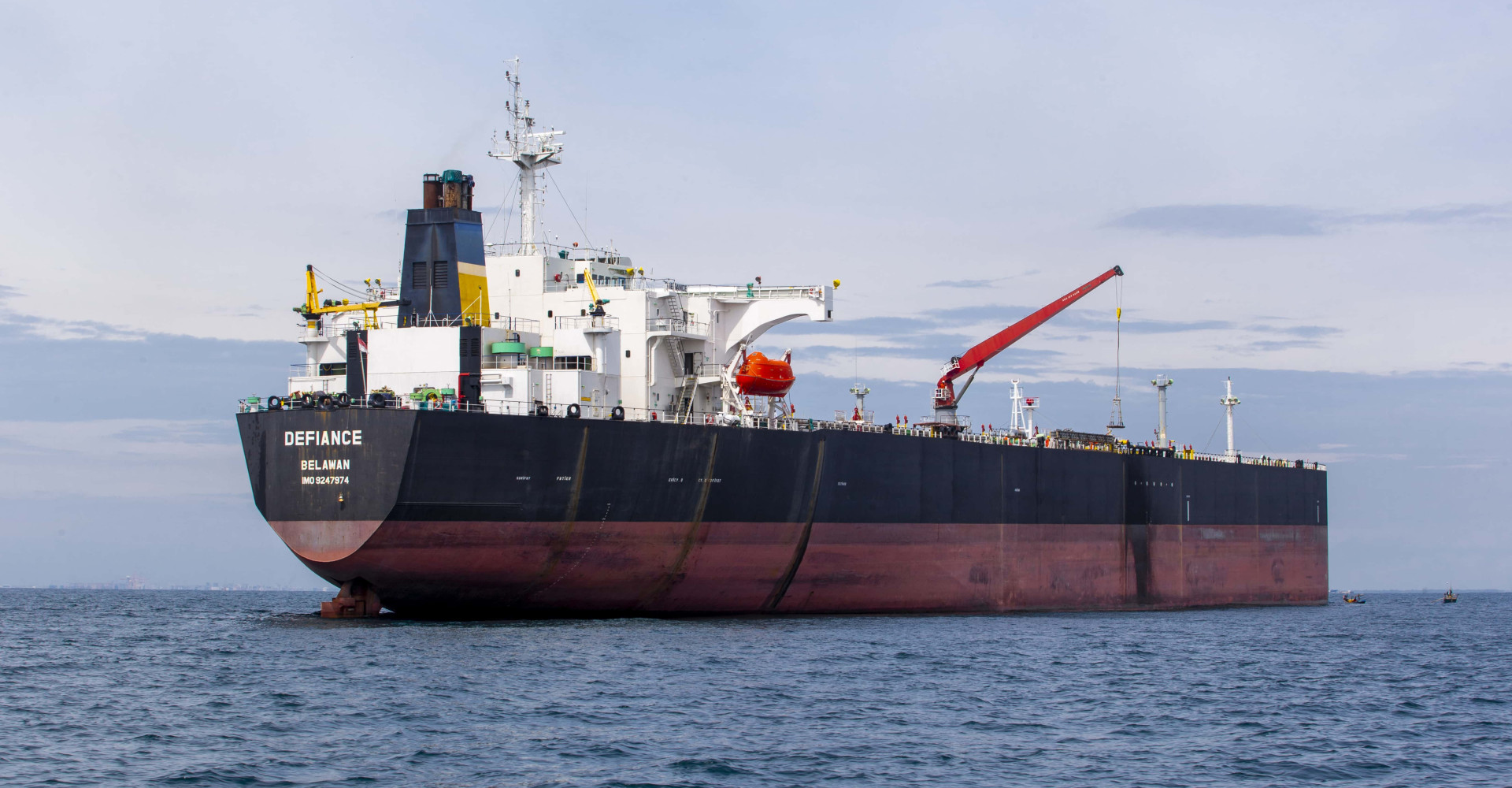
Large tankers can carry substantial amounts of cargo in a single voyage. However, not every shipment requires a vessel of that size. In some cases, smaller tankers may be a more practical and cost-effective option.
So, how are tankers classified by size? This article explores the different tanker size categories to help you choose the right vessel for your business needs. So, read on to learn more!
About Tanker Ships
Tankers are vessels designed to transport large quantities of liquid cargo, such as crude oil, vegetable oils, and liquid chemicals. Depending on the type of cargo, these liquids are carried in dedicated tanks built into the vessel and designed to maintain specific pressure and temperature conditions when necessary.
Unlike bulk carriers, which transport dry commodities in cargo holds, or container ships, which carry goods in standardized containers, tankers are specifically designed to handle liquid cargo safely and efficiently. Their design takes into account several key cargo characteristics, including temperature, pressure, chemical reactivity, viscosity, and potential environmental hazards.
Functions of Tanker Ships
Tanker ships play a vital role in supporting global trade by transporting a wide range of liquid cargo. Their key functions include:
- Transport crude oil from offshore drilling platforms to oil refineries.
- Distributing refined petroleum products, such as gasoline and diesel, from refineries to distribution hubs and fuel stations.
- Transporting industrial chemicals, including acids and solvents, to support industries such as pharmaceuticals, textiles, manufacturing, and agriculture.
- Carrying liquid food products, such as milk, juice, and molasses, from production facilities to distribution centers.
- Supplying fuel and lubricants to support the operation of other vessels.
Classification of Tanker Ships by Size
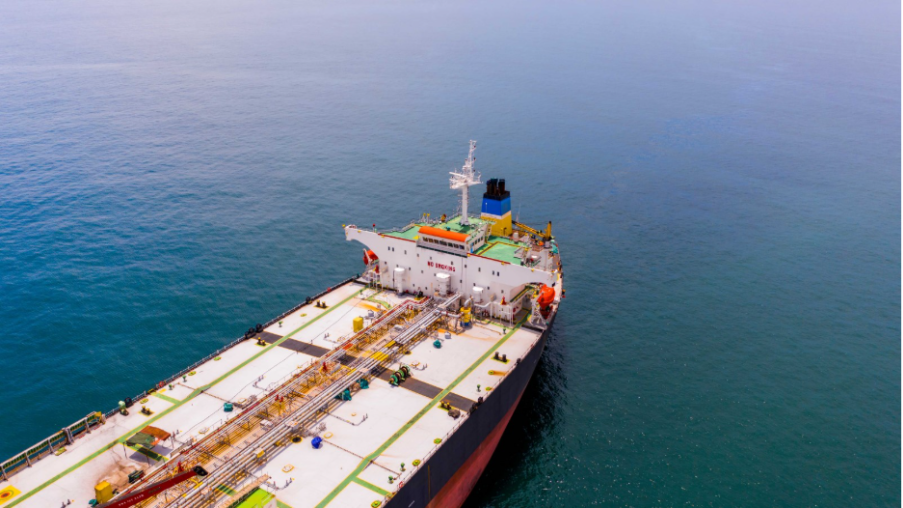
Tanker ships are classified by size based on their DWT (Deadweight Tonnage), which refers to the total weight a vessel can carry, including cargo, fuel, water, and provisions.
Based on DWT, tankers are generally divided into seven categories: Ultra Large Crude Carriers (ULCCs), Very Large Crude Carriers (VLCCs), Aframax, Suezmax, Medium Range (MR), General Purpose, and Small Tankers. Here is a closer look at each category:
ULCC (Ultra Large Crude Carriers)
ULCCs are supertankers with a deadweight capacity of more than 320,000 DWT. They are typically used for long-distance shipping routes and are among the largest vessels in the commercial shipping industry.
By carrying larger volumes of cargo per voyage, ULCCs can reduce the number of trips required to transport the same amount of oil. This makes them particularly useful on routes with high and consistent demand.
However, their enormous size limits the number of ports they can access. ULCCs are also unable to navigate certain narrow or shallow waterways, such as the Strait of Malacca.
As a result, operating a ULCC is not always the most efficient option. Over time, some vessels have been repurposed as offshore storage units before eventually being dismantled at the end of their service lives.
VLCC (Very Large Crude Carriers)
VLCCs have a deadweight capacity of up to approximately 320,000 DWT. These vessels can carry up to 2 million barrels of crude oil in a single voyage, making them well suited for transporting oil between facilities and across international borders. Typically measuring 300–330 meters in length, they are nearly as long as the Tokyo Tower is tall.
Due to their large dimensions, VLCCs rarely berth directly at conventional coastal terminals. Instead, they typically use offshore berths or mooring facilities, where cargo is transferred through pipeline systems.
In terms of construction, VLCCs feature a double-hull design to help reduce the risk of oil spills in the event of a collision or grounding. Their interiors are divided into approximately 17 cargo tanks, allowing them to carry different grades of crude oil simultaneously.
Aframax
Aframax tankers typically have a deadweight capacity of around 80,000–120,000 DWT. The term Aframax comes from the Average Freight Rate Assessment (AFRA), a system historically used to standardize tanker freight rates.
These vessels are commonly used to transport oil over medium-distance routes, including across the Mediterranean Sea, the China Sea, and the Black Sea.
Aframax tankers can carry substantial volumes of oil while still accessing ports that may be unable to accommodate larger tankers. This makes them an important link between oil producers, refineries, and storage facilities across different regions.
Suezmax
Suezmax tankers typically have a deadweight capacity of around 120,000–150,000 DWT. Their name reflects their defining characteristic: they are among the largest tankers capable of transiting the Suez Canal fully laden.
These vessels are generally around 285 meters long and 45 meters wide, with the capacity to carry nearly 1 million barrels of crude oil, approximately half the capacity of a VLCC.
When the Suez Canal is operating smoothly and transit conditions are predictable, Suezmax tankers offer a flexible option for long-distance oil transportation.
Medium Range (MR)
Medium Range (MR) tankers are mid-sized vessels with a typical deadweight capacity of around 25,000–45,000 DWT. They are among the most widely used tanker classes in global oil trade, thanks to their versatility in transporting refined petroleum products, such as gasoline, diesel, and jet fuel, as well as various liquid chemicals.
With their relatively large cargo capacity and flexible dimensions, MR tankers are a popular choice for distributing petroleum products over medium- to long-distance routes. Their size also allows them to access a wide range of major ports.
General Purpose
General Purpose (GP) tankers are smaller vessels, often classified as small product tankers or handysize tankers, with a typical deadweight capacity of around 10,000–25,000 DWT. They are designed to carry a variety of liquid cargo, ranging from refined petroleum products, such as gasoline, diesel, and jet fuel, to liquid chemicals and vegetable oils.
These tankers are well suited to short- and medium-distance regional distribution. For example, they can support cargo transportation between islands or between countries within the same region.
Small Tankers
Small tankers are vessels with a deadweight capacity of less than 10,000 DWT. Their relatively shallow draft allows them to access smaller ports, river terminals, and coastal areas that may be difficult for larger tankers to reach.
These vessels are typically used to transport smaller volumes of liquid cargo, distribute fuel for local consumption, and support bunkering operations, which involve supplying fuel to other vessels.
Tanker Classes and Sizes at Waruna Group
Now that you understand how tankers are classified by size, it is also worth exploring the fleet options available from vessel chartering service providers.
Waruna Group, a maritime partner supporting energy distribution across Indonesia, offers Shipping Services backed by a fleet of tankers in various size categories. The available classes and their typical deadweight capacities include:
|
Tanker Types |
Deadweight Capacity (DWT) |
|
Small Tanker |
< 10.000 |
|
General Purpose |
10.000–25.000 |
|
Medium Range |
25.000–45.000 |
|
Aframax |
80.000–120.000 |
|
Suezmax |
120.000–150.000 |
Several Waruna tankers have supported the shipping and transportation needs of various companies, including MT ORIENTAL SPIRIT, with a capacity of 18,041 DWT, and MT TANKER VICTORY, with a capacity of 40,845 DWT.
Waruna also operates vessels with both smaller and larger capacities, including tankers of up to 107,200 DWT. To find the right tanker for your business operations, contact our team today for a consultation and explore the fleet options best suited to your shipping requirements!